
















34 points essentiels que vous devez savoir sur les machines de soudage au laser


A laser welding machine is a cutting-edge technology used in modern industries for precision welding applications. It employs a highly focused laser beam to fuse together metals or thermoplastics with exceptional accuracy and efficiency. The laser beam, generated by various types of lasers such as CO2 lasers, fiber lasers, or Nd: YAG lasers, offers several advantages over traditional welding methods, including minimal heat-affected zones, reduced distortion, and the ability to weld complex geometries. Laser welding machines find widespread use in the automotive, aerospace, electronics, medical, and jewelry industries, among others, where the demand for high-quality, intricate welding is essential.
With continuous advancements in laser technology and automation integration, laser welding machines are poised to play an increasingly vital role in manufacturing processes of the future.
Fundamentals of Laser Welding
Laser welding is a cutting-edge joining process that has revolutionized the manufacturing industry, offering a range of benefits over traditional welding methods. Utilizing the power of focused light, laser welding has become an indispensable technique in various sectors, including automotive, aerospace, electronics, and medical industries. This article explores the fundamentals of laser welding, its working principle, advantages, and applications.

How Laser Welding Works
Laser welding involves using a highly concentrated beam of coherent light to melt and fuse materials together. The laser beam’s energy is directed precisely onto the welding joint, which results in localized heating and subsequent fusion of the workpieces. The process is facilitated by the interaction of photons with the atoms in the material, generating intense heat at the point of focus.
There are two primary types of laser welding methods: conduction mode welding and keyhole mode welding.
- Conduction Mode Welding: In this mode, the laser beam’s energy is relatively low, causing the material to heat up and conduct heat to the adjacent area. It is commonly used for shallow welds and thin materials.
- Keyhole Mode Welding: In keyhole mode, the laser beam’s intensity is significantly higher, leading to the formation of a “keyhole” in the material. This keyhole is a vapor-filled cavity, created by the laser’s energy pushing the molten material away. The keyhole allows for deeper penetration and is suitable for thicker materials.
Advantages of Laser Welding Machine
Laser welding offers several advantages over conventional welding techniques, making it a preferred choice in various industries. Some of the key benefits include:
- Precision and Control: Laser welding provides exceptional control over the energy input, resulting in precise and accurate welds. This level of control is crucial for delicate applications in the medical and electronics sectors.
- High Weld Quality: The focused laser beam enables deep penetration and minimal heat-affected zones, leading to high-quality welds with minimal distortion. This is especially advantageous when working with heat-sensitive materials.
- Rapidité et efficacité : Laser welding machine is a rapid process, as the energy is concentrated on a small area. It leads to faster production rates and increased efficiency compared to traditional welding methods.
- Polyvalence: A laser welding machine can be used to join a wide range of materials, including metals, plastics, ceramics, and even dissimilar materials, broadening its application potential.
- Automation Integration: Laser welding can be easily integrated into automated manufacturing processes, reducing labor costs and ensuring consistent weld quality.
- Clean and Environmentally Friendly: The process produces minimal fumes and pollutants, making it an environmentally friendly welding technique.

Applications of Laser Welding Machine
The versatility and precision of laser welding have opened up numerous applications across various industries, including:
- Automotive Industry: Laser welding is commonly used in the automotive sector to join body components, exhaust systems, and fuel tanks. Its ability to create strong and lightweight welds contributes to improved vehicle performance and fuel efficiency.
- Aerospace Industry: In aerospace, where the demand for lightweight and durable materials is critical, laser welding is utilized for joining components made of aluminum, titanium, and other alloys.
- Electronics Industry: Laser welding is essential in the electronics industry for delicate components, such as microelectronics and sensors, where precise welding is necessary.
- Medical Devices: The medical sector benefits from laser welding’s ability to join small and intricate components in devices like pacemakers, surgical instruments, and dental implants.
- Jewelry Manufacturing: Laser welding is widely used in the jewelry industry to join precious metals with minimal distortion and without the need for additional soldering materials.
- Additive Manufacturing: Laser welding plays a vital role in 3D printing and additive manufacturing processes, allowing for the fabrication of complex and customized parts.
Laser welding has undoubtedly revolutionized the welding industry by providing a precise, efficient, and versatile method for joining materials. Its ability to produce high-quality welds with minimal heat input and distortion make it an ideal choice for various applications, from automotive and aerospace to electronics and medical sectors. As technology continues to advance, laser welding techniques will likely become even more sophisticated, further expanding its range of applications and contributing to the advancement of manufacturing processes as a whole.
Components of a Laser Welding Machine

Laser welding machines are sophisticated and precise tools that utilize the power of focused light to join materials together. These machines play a pivotal role in modern manufacturing processes, offering numerous advantages over conventional welding techniques. To understand how laser welding machines work, it’s essential to explore their key components and their functions. In this article, we will delve into the components of a laser welding machine and their significance in the welding process.
1. Source laser
The laser source is the heart of the laser welding machine. It generates a highly concentrated beam of coherent light that is used to melt and fuse materials. The two most common types of lasers used in welding machines are:
- Fiber Lasers: These lasers use optical fibers to deliver the laser beam to the welding head. Fiber lasers are known for their high efficiency, reliability, and ability to deliver precise and stable output.
- CO2 Lasers: Carbon dioxide (CO2) lasers are another type commonly used in welding machines, especially for thicker materials. They operate at longer wavelengths and are well-suited for materials like plastics, ceramics, and certain metals.
2. Welding Head
The welding head is responsible for focusing the laser beam onto the welding joint with extreme accuracy. It typically consists of a lens system that concentrates the laser energy into a small spot size. The spot size and focus depth can be adjusted to suit specific welding requirements, such as material thickness and joint configuration.
3. Beam Delivery System
The beam delivery system transports the laser beam from the laser source to the welding head. In fiber lasers, optical fibers are used to guide the laser beam, while in CO2 lasers, a combination of mirrors and lenses is employed. The beam delivery system is designed to minimize energy loss and maintain beam quality throughout the delivery path.
4. Workpiece Holding and Positioning Mechanism
A laser welding machine includes a robust workpiece holding and positioning mechanism to ensure precise alignment during the welding process. This mechanism holds the workpieces securely in place and may have the capability to move them along multiple axes to achieve the desired welding path.
5. Système de contrôle
The control system serves as the brain of the laser welding machine. It encompasses various software and hardware components responsible for programming and executing the welding parameters. Operators can set parameters such as laser power, welding speed, focus, and pulse duration through the control system. Additionally, the control system may incorporate real-time monitoring and feedback mechanisms to ensure consistent weld quality.
6. Cooling System
Laser welding generates a significant amount of heat, especially during prolonged operations. The cooling system is crucial to maintain the laser source and other critical components at optimal temperatures. It prevents overheating and ensures the machine’s longevity and reliability.
7. Gas Supply System
In some laser welding applications, an assist gas is used to protect the weld zone and enhance the welding process. Commonly used assist gases include argon, helium, nitrogen, and oxygen. The gas supply system delivers the assist gas to the welding zone at the appropriate pressure and flow rate.
8. Des dispositifs de sécurité
Laser welding machines incorporate several safety features to protect operators and ensure safe operations. These features may include safety enclosures, interlocks, and laser emission indicators, which prevent accidental exposure to the laser beam.

Laser welding machines are sophisticated pieces of equipment that rely on a combination of precise components to deliver exceptional welding performance. Each component plays a crucial role in the overall functionality and efficiency of the machine. From the laser source that generates the intense beam of light to the control system that governs the welding parameters, every part contributes to the machine’s ability to produce high-quality and precise welds. As technology continues to advance, these components are likely to see further improvements, making laser welding an increasingly vital process in modern manufacturing industries.
Laser Welding Process
Laser welding is a cutting-edge joining process that has transformed the world of manufacturing, enabling precise and efficient bonding of materials. By utilizing the power of focused light, laser welding offers numerous advantages over traditional welding techniques, making it a preferred choice in various industries. In this article, we will explore the laser welding process, its working principle, types, and applications.
The Working Principle of Machine de soudage laser
At its core, laser welding involves using a highly concentrated beam of coherent light to melt and fuse materials together. The process works by directing the laser beam onto the welding joint, where it generates localized heat. The high-energy photons in the laser beam interact with the atoms in the material, causing them to vibrate rapidly and creating intense heat at the point of focus.
The heat causes the material to reach its melting point or even vaporize, depending on the laser’s intensity and the material’s properties. As the laser moves along the welding joint, the molten material solidifies, creating a strong and seamless bond between the workpieces.
Types of Laser Welding Machine
There are two primary types of laser welding techniques:
- Conduction Mode Welding: In conduction mode welding, the laser beam’s energy is relatively low. The heat generated is conducted through the material, and the welding occurs at the surface. This mode of welding is commonly used for shallow welds and thin materials, as it produces minimal penetration.
- Keyhole Mode Welding: Keyhole mode welding, also known as deep penetration welding, uses a highly intense laser beam. The beam’s energy creates a vapor-filled cavity called a “keyhole” in the material. The keyhole allows for deeper penetration into the workpiece, making it suitable for thicker materials. As the laser moves along the joint, the keyhole is filled with molten material, which solidifies to form a strong weld.
The Laser Welding Process: Step by Step
The laser welding process typically involves the following steps:
- Preparation: Before welding, the workpieces are properly cleaned, aligned, and positioned in the welding fixture. Proper preparation ensures accurate and precise welds.
- Focusing the Laser Beam: The laser beam is directed onto the welding joint using a welding head equipped with a lens system. The lens focuses the laser energy into a small and precise spot size.
- Welding: The focused laser beam is scanned along the welding joint with the help of a robotic arm or a CNC system. As the laser moves, it melts the material at the point of contact, forming a weld pool.
- Solidification: As the laser moves away, the molten material solidifies, creating a strong bond between the workpieces.
- Cooling and Solidification: After the welding process is completed, the welded area is allowed to cool and solidify. Proper cooling ensures that the weld solidifies with the desired metallurgical properties.
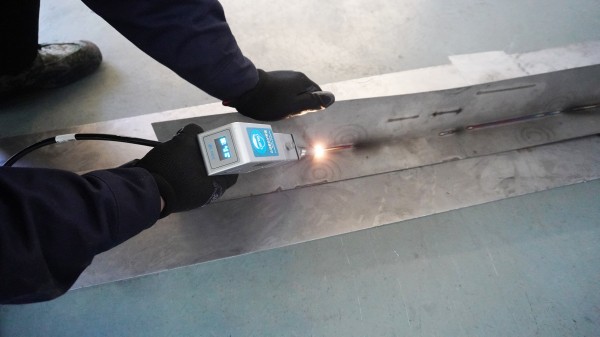
Advantages of Laser Welding Machine
Laser welding offers several significant advantages over conventional welding techniques:
- Precision and Control: The laser welding Machine provides exceptional control over the welding process, resulting in precise and accurate welds. This level of control is crucial for delicate applications in the medical, electronics, and aerospace industries.
- High Weld Quality: Laser welding produces high-quality welds with minimal distortion and narrow heat-affected zones. The lack of filler material also contributes to the cleanliness and integrity of the weld.
- Rapidité et efficacité : Laser welding is a rapid process, as the laser beam’s energy is concentrated on a small area. It leads to faster production rates and increased efficiency compared to traditional welding methods.
- Polyvalence: Laser welding can be used to join a wide range of materials, including metals, plastics, ceramics, and even dissimilar materials. This versatility expands its application potential across various industries.
- Minimal Heat Input: Laser welding’s localized heating results in less overall heat input, making it suitable for heat-sensitive materials and thin components.
- Automation Integration: Laser welding can be easily integrated into automated manufacturing processes, reducing labor costs and ensuring consistent weld quality.
Laser welding is a powerful and versatile joining process that has revolutionized the manufacturing industry. By harnessing the precision of focused light, laser welding offers numerous advantages over traditional welding methods, including high weld quality, efficiency, and the ability to join a wide range of materials. From automotive and aerospace to electronics and medical applications, laser welding continues to drive innovation and improve manufacturing processes across various sectors. As technology advances, laser welding is expected to further expand its applications, paving the way for more efficient and precise manufacturing techniques in the future.


