
















Budgeting for Operator Training and Safety Certifications

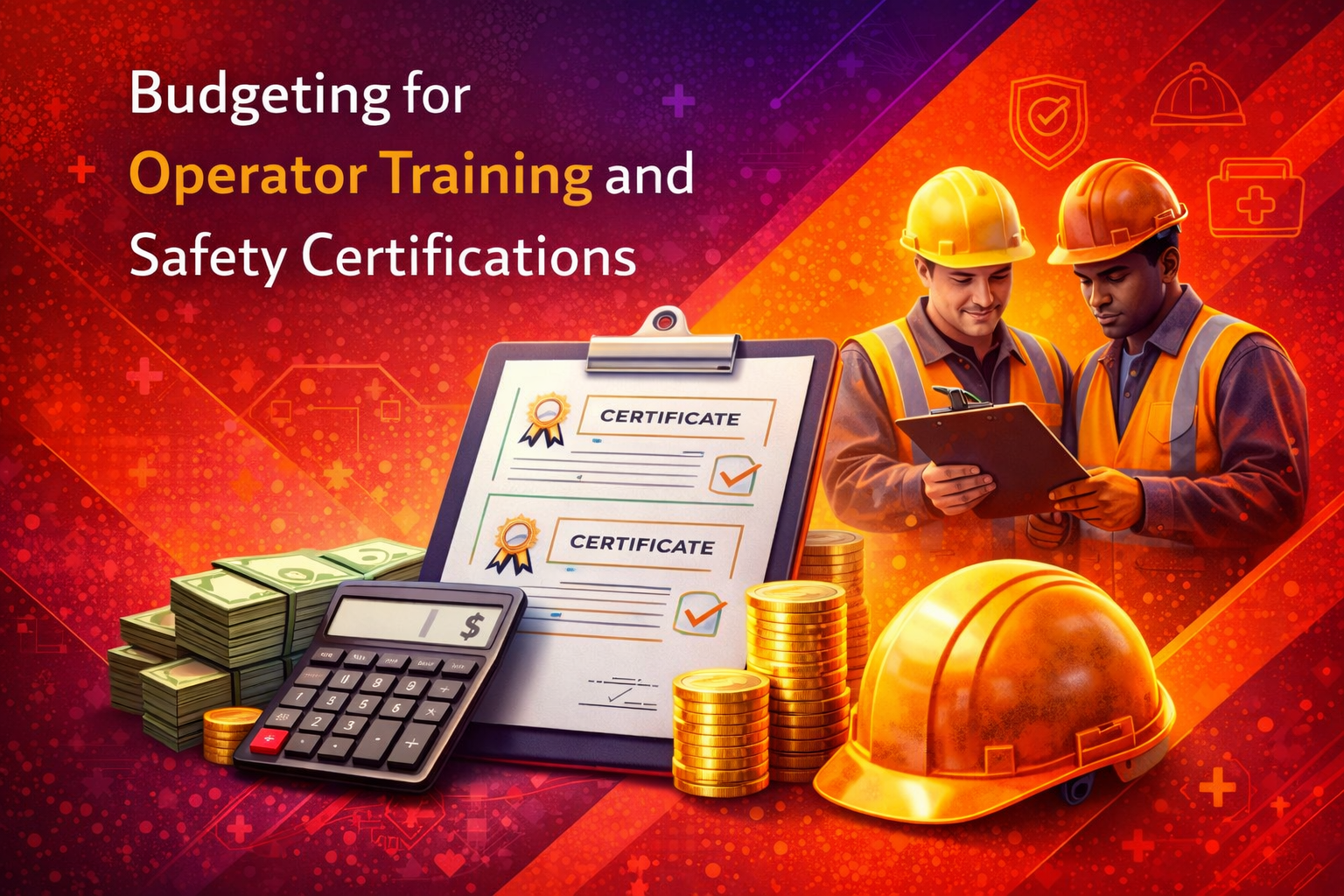
In the modern sheet metal fabrication landscape, the acquisition of high-precision machinery like fiber lasers, CNC press brakes, and automated panel benders represents a significant capital investment. However, the performance of these assets is inextricably linked to the proficiency of the personnel operating them. Establishing a robust budget for Operator Training and Safety Certifications is not merely a compliance exercise but a strategic engineering decision that directly impacts machine uptime, scrap rates, and the overall lifespan of the equipment. This article examines the technical nuances of operator training, the financial frameworks required for certification budgeting, and the long-term ROI generated by a highly skilled workforce.
Understanding the Basics of Operator Training and Safety Certifications
Operator training in a fabrication environment involves a multi-tiered approach to skill acquisition. It begins with basic machine operation, progresses to advanced programming and troubleshooting, and culminates in rigorous safety protocols. Safety certifications, on the other hand, are formal validations provided by third-party organizations or internal safety officers that an operator understands and can mitigate the specific risks associated with heavy machinery. In the United States, OSHA (Occupational Safety and Health Administration) mandates certain safety standards, while international standards such as ISO or ANSI provide more specific technical guidelines for machine-specific safety.
Investments in human technical capital often yield higher dividends than hardware upgrades, as a skilled operator can extract maximum efficiency from existing machinery.
The core of this process is the competency-based assessment. Unlike general workplace safety, machine-specific certifications focus on the mechanical and electrical hazards unique to equipment such as high-tonnage press brakes or Class 4 laser cutting systems. Budgeting for these programs requires an understanding of training hours, material costs for practice runs, and the administrative costs of maintaining valid certification records.
Why Operator Training and Safety Certifications Matter in Sheet Metal Fabrication
In the precision-driven world of sheet metal, the cost of a single error can be staggering. An untrained operator might miscalculate a bending allowance or select an incorrect die opening, leading to a scrapped batch of expensive aerospace-grade aluminum. Beyond material waste, improper operation can lead to catastrophic machine failure. For example, over-tonnage on a press brake or neglecting to clean the focusing lens on a fiber laser can result in repair costs exceeding tens of thousands of dollars.
Furthermore, safety is a critical component of operational stability. Workplace accidents lead to high insurance premiums, potential legal liabilities, and significant downtime. By prioritizing Operator Training and Safety Certifications, factory managers ensure that every team member can identify hazards before they escalate into incidents. This proactive safety culture is essential for maintaining high throughput in 24/7 manufacturing environments where speed and safety must coexist.
Key Factors to Consider When Planning Your Training Budget
When developing a budget for training and certifications, several technical and administrative variables must be quantified:
- Machine Complexity: A basic hydraulic shear requires less training time than a 5-axis fiber laser with automated material loading.
- Turnover Rates: If your facility has a high staff turnover, your training budget must account for continuous onboarding rather than one-time sessions.
- Technological Updates: Software updates (such as new versions of CAD/CAM software or machine HMI) necessitate recurring training modules.
- Regulatory Requirements: Specific certifications for hazardous material handling or laser safety officer (LSO) roles may be required by local law.
- Consumables and Scrap: Training involves hands-on practice, which consumes electricity, gases, and raw materials. These must be line items in the budget.
Technical Explanation: Calculating the ROI of Operator Training and Safety Certifications
To justify the budget to stakeholders, engineers can use a simplified Return on Investment (ROI) calculation based on the reduction of the Cost of Poor Quality (COPQ) and downtime. A common formula for the annual return on training is:
ROI = ((Annual Savings from Reduced Scrap + Increased Production Value) – Total Training Cost) / Total Training Cost * 100
Consider an example where a facility invests $10,000 in advanced press brake training for five operators. If this training reduces the scrap rate by 5 percent on a production line worth $500,000 annually, the savings amount to $25,000. Additionally, if the training reduces machine downtime by 20 hours a year (valued at $200 per hour), another $4,000 is saved. The total benefit is $29,000, yielding an ROI of 190 percent.
Another technical metric is the Safety Distance Calculation (S) used in designing training for light curtains and safety guards, as defined by ISO 13855. Operators must be trained to understand this formula to ensure they do not bypass safety systems:
S = (K * T) + C
Where K is the approach speed of the human body (usually 1600mm/s), T is the total response time of the machine, and C is the additional distance based on the intrusion of a hand through the sensing field. Training budgets should include the time required for operators to perform these safety validations periodically.
Comparison: Internal vs. External Training and Certification Methods
Deciding between internal mentorship and external professional certification is a key budgeting hurdle. The following table compares these two primary approaches:
| Fonctionnalité | Internal Mentorship | OEM / Third-Party Certification |
|---|---|---|
| Initial Cost | Low (Labor hours only) | High (Tuition/Travel fees) |
| Technical Depth | Variable (Depends on mentor) | High (Standardized curriculum) |
| Certification Weight | Internal validation only | Industry-recognized credential |
| Customization | High (Specific to shop floor) | Moderate (General principles) |
| Audit Compliance | Requires rigorous documentation | Simplifies OSHA/ISO audits |
Step-by-Step Guide to Implementing a Training Budget
- Skill Gap Analysis: Evaluate current operator capabilities against the technical requirements of your newest machinery.
- Define Certification Targets: Identify which operators need basic safety training and which require advanced technician-level certifications.
- Source Training Providers: Contact machine OEMs (Original Equipment Manufacturers) or certified safety organizations for quotes.
- Allocate for Non-Productive Time: Budget for the labor hours when operators will be in the classroom rather than on the production line.
- Establish a Material Allowance: Reserve a specific volume of sheet metal for training-related test cuts and bends.
- Monitor and Revise: Track the correlation between training sessions and machine performance metrics to adjust future budgets.
Common Mistakes in Budgeting for Safety Certifications
One of the most frequent errors is treating training as a one-time capital expenditure rather than an operational expense. Technology in the sheet metal industry evolves rapidly; an operator certified on a CO2 laser ten years ago is not automatically qualified to manage a modern 12kW fiber laser with different wavelength risks and nozzle technologies.
Another mistake is ignoring the “soft costs” of safety. This includes the time spent by managers documenting certifications and the cost of replacing safety gear like specialized goggles or protective gloves. Finally, many budgets fail to account for the “refresher” courses required by OSHA every few years, leading to unexpected financial strain when an audit approachs.
Industry Applications: Training for Press Brakes and Lasers
In high-precision industries like aerospace or medical device manufacturing, the requirements for Operator Training and Safety Certifications are exceptionally high. For press brakes, operators must be certified not just in machine safety, but in precision measurement and blueprint reading to ensure tolerances of +/- 0.005 inches are met. For laser cutting, specialized training in gas management (nitrogen vs. oxygen) and beam alignment is critical for maintaining edge quality.
In an automated cell, the operator transitions from a manual laborer to a process manager. Their training budget must reflect this shift toward data analysis and system diagnostics.
As factories move toward Industry 4.0, the training budget must also cover digital literacy. Operators need to understand how to interact with ERP systems and interpret real-time data from IoT-connected machines. This technical proficiency reduces the time to market and ensures the factory remains competitive in a global economy.
Conclusion
Strategic budgeting for Operator Training and Safety Certifications is an essential pillar of modern industrial management. By quantifying the technical requirements and calculating the potential ROI, factory owners and engineers can transform training from a perceived cost center into a powerful engine for efficiency. A well-trained workforce not only operates machinery with greater precision but also serves as the first line of defense against workplace hazards, ensuring a sustainable and profitable fabrication environment. As machinery becomes more complex, the value of the human element will only increase, making ongoing education the smartest investment a manufacturer can make.
FAQ
How often should safety certifications be renewed for sheet metal operators?
Generally, a full recertification should occur every 2 to 3 years, though annual refresher courses are recommended to keep up with new safety standards and software updates.
Does training on a fiber laser translate to CO2 laser safety?
While some principles are similar, the wavelength of fiber lasers is much more dangerous to the human eye, requiring different protective eyewear and enclosures. Specific training for each laser type is mandatory.
What is the average cost per operator for OEM press brake training?
Typically, OEM training ranges from $1,500 to $3,500 per operator, depending on the complexity of the machine and whether the training is conducted on-site or at the manufacturer’s facility.
Can safety certifications reduce my insurance premiums?
Yes, many industrial insurance providers offer discounts to facilities that can provide documented proof of formal safety training and valid certifications for all machine operators.
Is on-the-job training (OJT) sufficient for OSHA compliance?
OJT is valuable but must be supplemented with formal, documented safety training that covers the specific hazardous energy control (lockout/tagout) and point-of-operation guarding standards.