














Buying Guide: Hydraulic Presses for the Aerospace Industry


In the high-stakes world of aerospace manufacturing, precision is not just a goal; it is a regulatory requirement. The production of airframe components, turbine parts, and structural elements demands equipment that can handle exotic alloys while maintaining microscopic tolerances. Among the most critical pieces of equipment in an aerospace facility is the hydraulic press. Unlike standard industrial presses, Hydraulic Presses for the Aerospace Industry must offer exceptional control over pressure, temperature, and speed to manage the unique characteristics of materials like Titanium, Inconel, and high-strength Aluminum alloys.
As aircraft designs evolve to prioritize fuel efficiency and weight reduction, the complexity of formed parts increases. This shifts the focus from simple mechanical stamping to sophisticated hydraulic processes such as Superplastic Forming (SPF), Hot Stamping, and Composite Bonding. For engineers and procurement managers, selecting the right press involves more than just comparing tonnage; it requires a deep dive into frame rigidity, thermal management, and digital traceability systems that satisfy AS9100 standards.
Understanding the Basics of Aerospace Hydraulic Presses
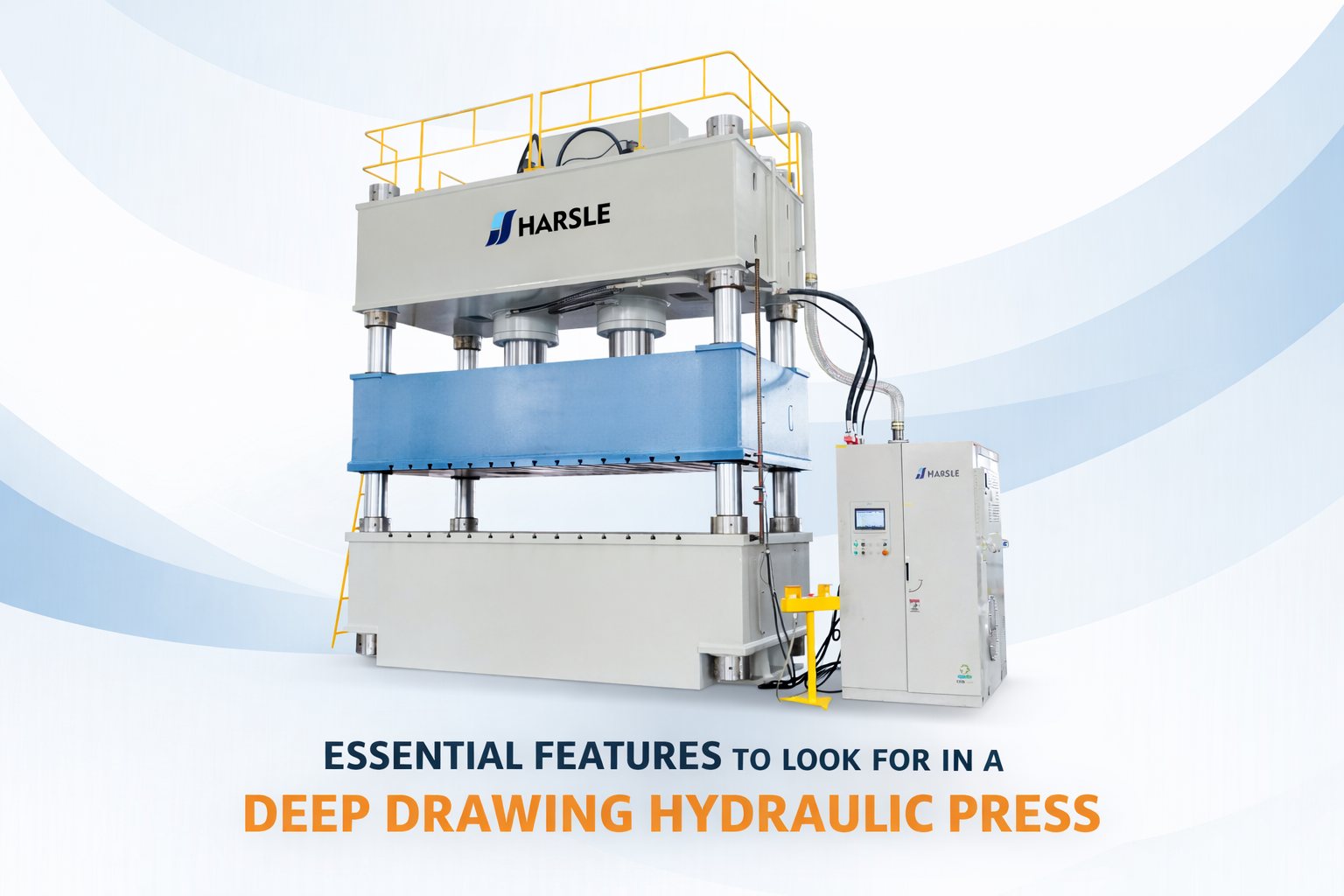
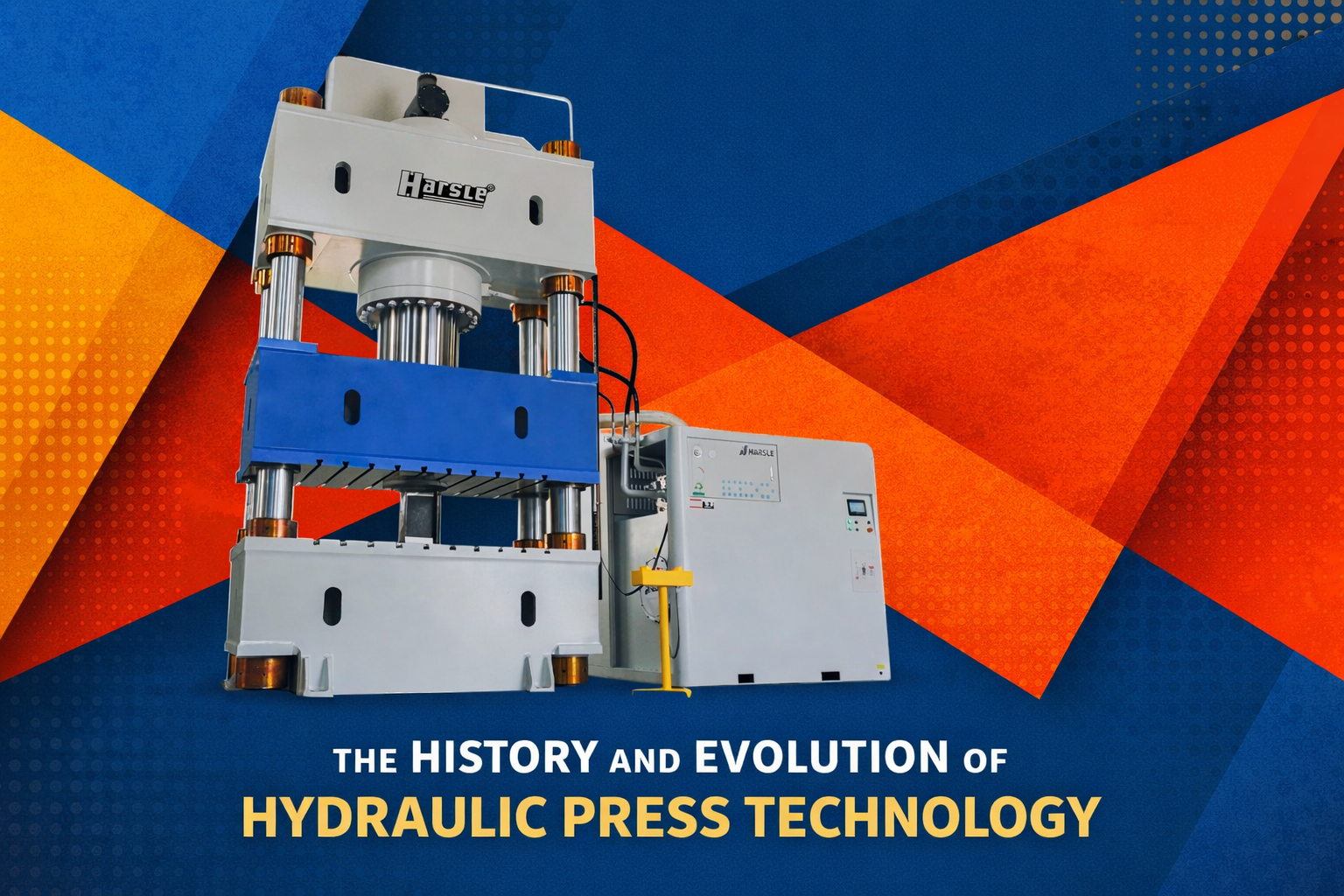
A hydraulic press utilizes Pascal’s Principle to generate a compressive force through a hydraulic cylinder. In an aerospace context, these machines are specialized systems designed for specific forming techniques. Unlike mechanical presses that have a fixed stroke, hydraulic presses provide full tonnage throughout the entire stroke, which is essential for deep drawing and complex forming operations common in aerospace components.
The fundamental architecture of these presses usually falls into two categories: the four-column (or four-post) design and the side-frame (or C-frame/H-frame) design. For aerospace, the four-column design is often preferred because it allows for equal distribution of pressure across the bolster and provides unobstructed access to the die area from all four sides, facilitating the integration of automated loading systems or heated platens.
In aerospace fabrication, the hydraulic press acts as more than a hammer; it is a precision instrument that manages the molecular transition of high-performance alloys under controlled thermal and mechanical stress.
Why This Topic Matters in Sheet Metal Fabrication
The aerospace industry is currently undergoing a shift toward larger, integrated monolithic structures to reduce part counts and weight. This means sheet metal fabrication shops must be capable of forming larger sections with higher precision. Hydraulic Presses for the Aerospace Industry allow for the manipulation of materials that exhibit high springback or low ductility at room temperature.
Furthermore, the industry’s move toward Industry 4.0 means that the press is no longer an isolated machine. It must be a data-gathering hub. Every cycle’s pressure curve, temperature profile, and dwell time must be recorded for quality assurance. Without the right hydraulic press technology, a fabricator cannot meet the stringent certification requirements needed to supply Tier 1 and Tier 2 aerospace manufacturers.
Key Factors to Consider When Selecting a Press
When evaluating Hydraulic Presses for the Aerospace Industry, several technical parameters must be prioritized to ensure the machine can handle the specific demands of aircraft grade materials.
- Tonnage Capacity and Control: While raw force is important, the ability to control that force within 1% of the setpoint is critical for preventing material thinning or fracture in high-strength alloys.
- Frame Rigidity: Minimal deflection under load is vital to ensure that the upper and lower dies remain perfectly parallel, which directly affects the dimensional accuracy of the part.
- Heated Platens: Many aerospace alloys, such as Titanium Ti-6Al-4V, require forming at elevated temperatures (often exceeding 700°C). Integrated heating systems with precise PID control are essential.
- Dwell Time Capability: Certain forming processes require the press to hold a specific pressure for minutes or even hours (especially in diffusion bonding). The hydraulic system must be designed for long dwell cycles without overheating the oil.
- Ram Speed Control: The ability to control the approach, pressing, and return speeds independently allows for optimized cycle times and prevents shock to the material.
Technical Explanation: Tonnage and Forming Force Calculations
Calculating the required tonnage is the first step in any procurement process. In aerospace, we often deal with deep drawing or stretch forming. To calculate the forming force (F) required for a simple cylindrical draw, we use the following engineering formula:
F = π × d × s × σ_uts × K
Where:
- d: Mean diameter of the part (mm)
- s: Material thickness (mm)
- σ_uts: Ultimate tensile strength of the material (MPa or N/mm²)
- K: A constant factor (typically 0.6 to 0.7 for drawing) to account for friction and bending.
For example, if you are forming a 300mm diameter housing from 2mm thick Grade 5 Titanium (σ_uts ≈ 950 MPa), the calculation would be:
F = 3.1415 × 300 × 2 × 950 × 0.7 = 1,253,458 N ≈ 128 Metric Tons.
However, in aerospace, we must also account for the Blank Holder Force (BHF), which prevents wrinkling. This typically adds another 30% to 50% to the total tonnage requirement, meaning a 200-ton press would be the minimum safe capacity for this operation.
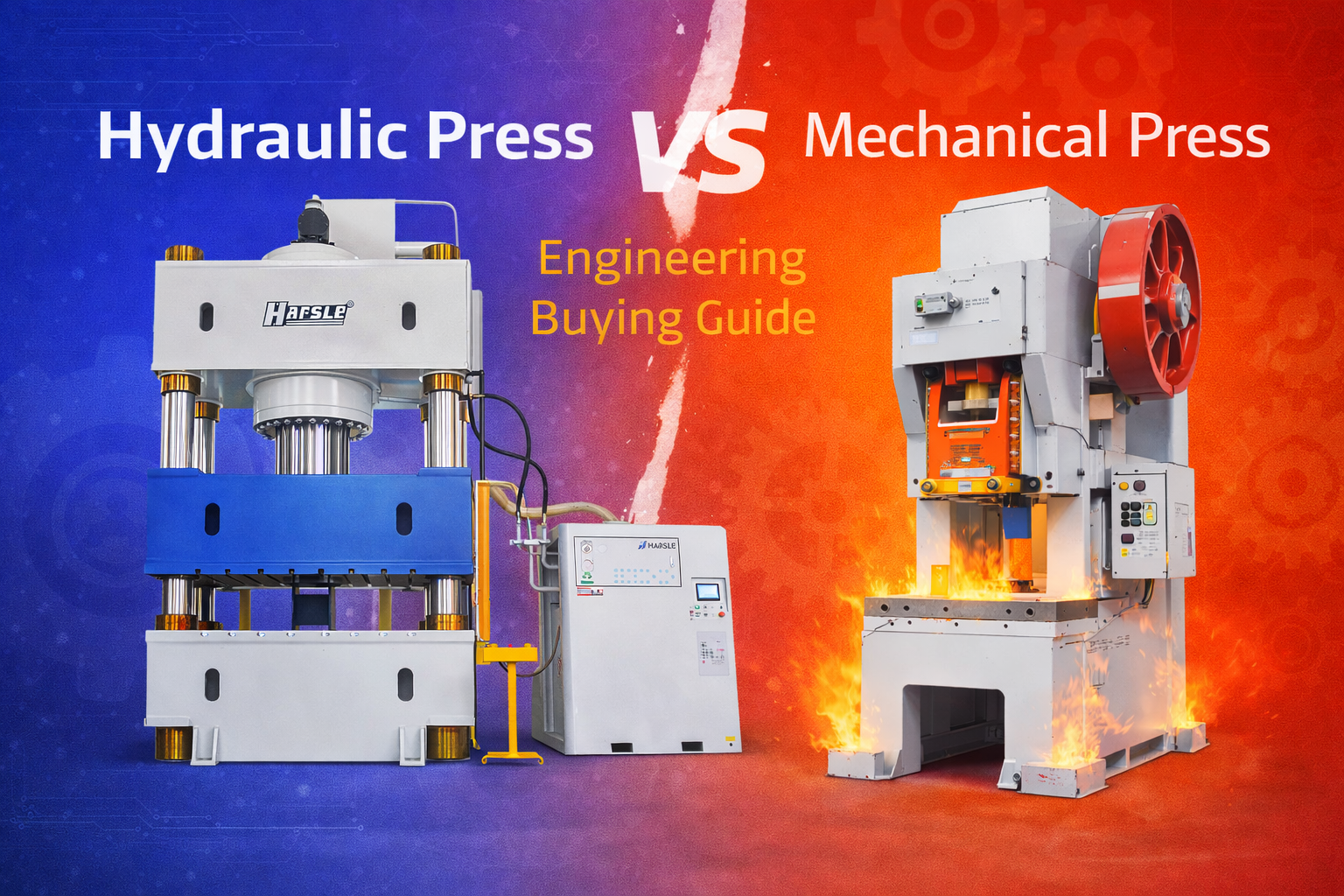
Comparison: Hydraulic vs. Mechanical Presses in Aerospace
| Recurso | Pressão hidráulica | Mechanical Press |
|---|---|---|
| Force Distribution | Constant tonnage throughout the stroke | Peak tonnage only at the bottom of the stroke |
| Comprimento do curso | Fully adjustable | Fixed stroke length |
| Process Suitability | Deep drawing, SPF, Hot Forming | Blanking, High-speed stamping |
| Speed Control | Variable and programmable | Generally fixed (unless servo-driven) |
| Overload Protection | Built-in (pressure relief valves) | Requires shear plates or hydraulic links |
Step-by-Step Guide to Purchasing Hydraulic Presses
- Define the Application: Identify the specific materials and thicknesses you will be working with. Determine if you need cold forming or hot forming capabilities.
- Determine Tonnage and Bolster Size: Calculate the maximum forming force required and add a 20% safety margin. Ensure the bolster area is large enough for your biggest dies plus clamping space.
- Specify Control Requirements: For aerospace, specify a PLC with data logging capabilities. You need to record ‘recipe’ parameters for each part number to ensure repeatability.
- Evaluate the Hydraulic System: Look for energy-efficient servo-hydraulic pumps. These systems reduce noise, heat, and energy consumption, which is critical for long dwell cycles.
- Safety and Compliance: Ensure the machine meets local safety standards (such as OSHA or CE) and possesses the necessary light curtains and dual-hand controls.
- Factory Acceptance Testing (FAT): Before shipping, perform a FAT at the manufacturer’s site using your specific tooling to verify that the press meets the required tolerances and cycle times.
Common Mistakes to Avoid
One of the most frequent errors is underestimating the required tonnage for high-strength aerospace alloys. Engineers often calculate force based on standard steel properties, but Titanium and Inconel require significantly higher pressures and exhibit more springback, necessitating higher blank holder forces.
Another mistake is ignoring thermal expansion. If the press uses heated platens, the frame must be designed to handle the thermal gradient. Without proper insulation and thermal expansion joints, the heat can distort the frame, leading to misalignment and premature wear of the hydraulic seals.
Failure to integrate a comprehensive data acquisition system is a critical oversight in modern aerospace manufacturing. If you cannot prove the process parameters of a part, you cannot fly the part.
Industry Applications
Hydraulic Presses for the Aerospace Industry are found in almost every stage of aircraft production:
- Engine Components: Forming turbine blades and nacelle skins using superplastic forming to achieve aerodynamic efficiencies.
- Fuselage Panels: Large-scale stretch forming of aluminum skins for commercial airliners.
- Structural Ribs: High-tonnage forging and forming of wing ribs and bulkheads that carry the primary loads of the aircraft.
- Exhaust Systems: Hot stamping of heat-resistant alloys for engine exhaust nozzles and heat shields.
Conclusão
Investing in a hydraulic press for aerospace applications is a significant capital expenditure that requires a long-term strategic view. By focusing on precision control, frame rigidity, and data traceability, manufacturers can ensure they are equipped to handle the rigorous demands of modern aviation. As the industry continues to push the boundaries of material science, having a versatile and highly controlled hydraulic system becomes a foundational competitive advantage.
Perguntas frequentes
What is the advantage of a servo-hydraulic press in aerospace?
Servo-hydraulic presses offer superior energy efficiency and much higher precision in ram positioning and pressure control. They also generate less heat in the hydraulic oil, which is ideal for long dwell-time processes like metal bonding.
How do heated platens affect the press design?
Heated platens require specialized insulation to prevent heat transfer to the main press frame and hydraulic cylinders. The design must also account for thermal expansion to ensure that the ram remains perfectly aligned even at temperatures up to 800°C.
What is ‘dwell time’ and why is it important for aerospace parts?
Dwell time is the duration the press maintains a specific pressure at the bottom of its stroke. In aerospace, this is critical for processes like Superplastic Forming (SPF) where the material needs time to flow into the die contours under constant pressure.
Why is frame rigidity more critical in aerospace than in other industries?
Aerospace parts have extremely tight tolerances. Any deflection or ‘yawning’ of the press frame under load results in uneven part thickness and dimensional inaccuracy, leading to high scrap rates of expensive materials like Titanium.
Can one hydraulic press be used for both hot and cold forming?
Yes, many aerospace presses are designed for dual-use. They feature removable heated platens and programmable control systems that can switch between high-speed cold stamping and slow-speed, high-pressure hot forming cycles.