














Evaluating Steel Plate Thickness and Welding Standards Guide

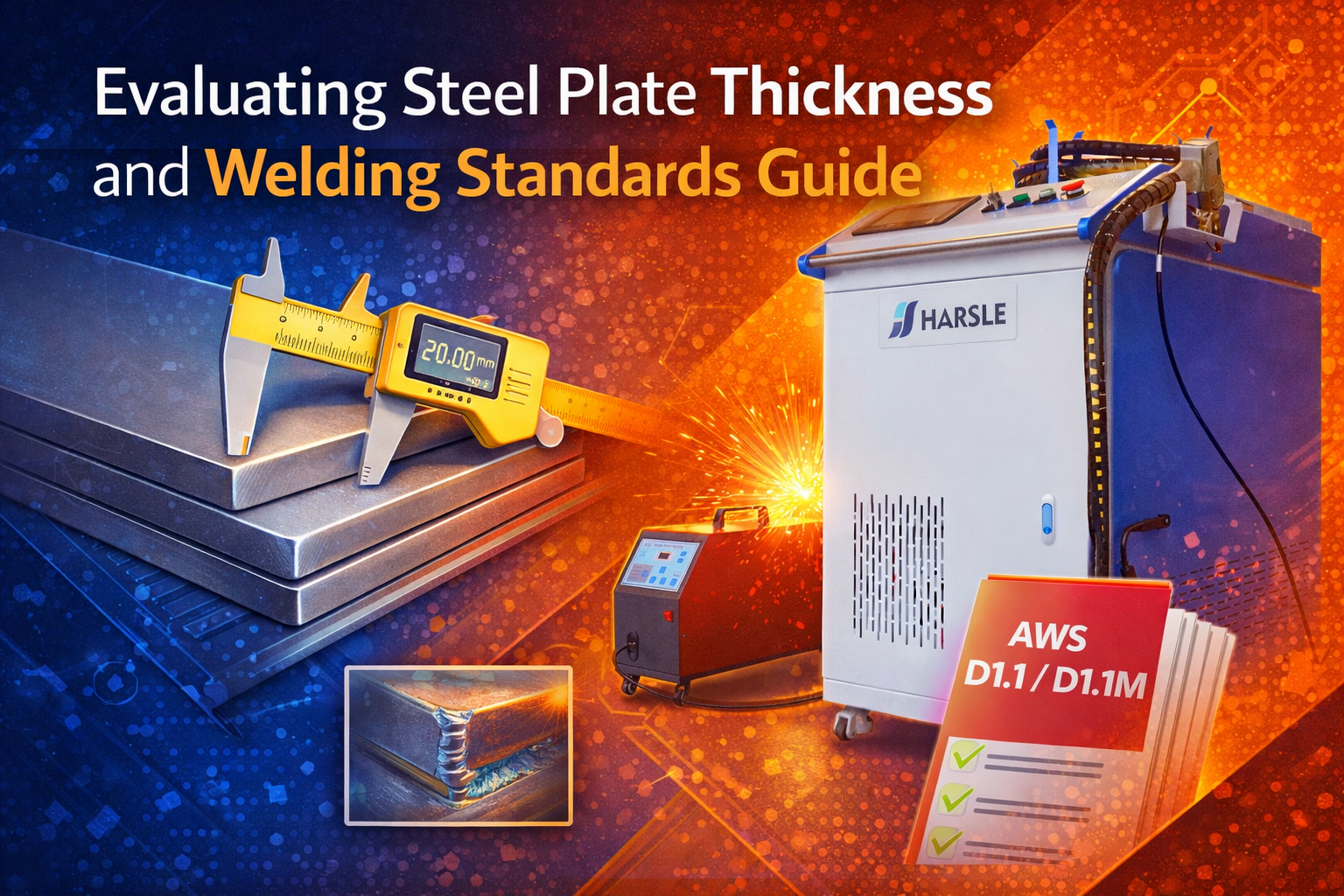
In the sophisticated landscape of heavy industrial machinery, the structural foundation of a machine determines its ultimate performance, accuracy, and longevity. When procuring high-end equipment like press brakes, laser cutters, or shearing machines, the most critical evaluation often happens at the structural level: specifically, the Steel Plate Thickness and Welding Standards utilized in the frame construction. A machine frame is more than just a housing; it is a rigid platform that must withstand hundreds of tons of force while maintaining tolerances within microns. For engineers and factory owners, understanding the nuances of material selection and joint integrity is essential to ensuring a high return on investment and operational safety. This article provides a comprehensive technical breakdown of these standards, offering a roadmap for evaluating build quality through the lens of mechanical engineering.
Understanding the Basics of Steel Plate Thickness and Welding Standards
The build quality of sheet metal machinery begins with the raw material. Most high-quality machine frames are constructed from structural carbon steel, such as Q235B, Q355B, or international equivalents like ASTM A36 and S355JR. The thickness of these plates is not arbitrary; it is calculated to handle specific static and dynamic loads. While thin plates may suffice for light-duty enclosures, the load-bearing side plates of a press brake require substantial thickness to prevent deflection. Alongside thickness, welding standards such as AWS D1.1 (Structural Welding Code—Steel) or ISO 5817 define the quality levels for imperfections in welded joints. These standards categorize welds based on factors like penetration, porosity, and undercut, ensuring that the machine can endure repetitive stress cycles without structural failure.
Structural integrity is the silent partner of precision; without a rigid, perfectly welded frame, even the most advanced CNC system cannot deliver accurate results.
Why Steel Plate Thickness and Welding Standards Matter in Fabrication
In the context of sheet metal fabrication, the primary enemy of precision is frame deflection. When a press brake applies 200 tons of force, the frame naturally attempts to expand or ‘yawn.’ If the steel plate thickness is insufficient or the welding standards are lax, this deflection becomes permanent, leading to a machine that can no longer produce a straight bend. Furthermore, vibration damping is heavily influenced by the mass and rigidity of the frame. Thicker plates and high-quality full-penetration welds provide the necessary mass to absorb the high-frequency vibrations generated during fiber laser cutting or high-speed punching. A lack of adherence to strict welding standards can lead to fatigue cracking at the heat-affected zones, effectively ending the service life of a multimillion-dollar machine prematurely.
Key Factors to Consider for Steel Plate Thickness and Welding Standards
When evaluating a machine’s build quality, several technical factors must be scrutinized by the engineering team:
- Material Yield Strength: The ability of the steel to return to its original shape after deformation. Higher grades like S355 provide better resilience than standard A36.
- Weld Penetration Depth: For critical load-bearing joints, full-penetration welds are mandatory. Partial penetration can leave internal gaps that act as stress concentrators.
- Heat Treatment and Stress Relief: After welding, thick steel plates retain internal residual stresses. Professional manufacturers use vibratory stress relief or thermal annealing to stabilize the frame.
- Plate Uniformity: Ensuring that the steel plates used are free from laminations and have consistent thickness across the entire sheet.
Technical Calculation: Tonnage and Stress Distribution
To understand the relationship between plate thickness and machine capacity, engineers use the basic stress formula: sigma = F / A, where sigma is the stress, F is the applied force, and A is the cross-sectional area of the load-bearing member. In a press brake, the side frames act as the primary load-bearing components. If a machine is rated for a force (F) of 2,000 kN and the side plate thickness is 60mm, the stress distribution must remain well below the yield strength of the material, typically applying a safety factor of 3:1 or 5:1. For deflection (y), the formula for a beam under load is y = (F * L^3) / (48 * E * I), where I is the moment of inertia. Increasing the steel plate thickness significantly increases the moment of inertia (I), thereby reducing deflection (y) cubically. This explains why even a 10mm increase in plate thickness can result in a vastly more stable machine.
Comparison of Frame Construction Methods
Manufacturers often choose between different structural designs. Below is a comparison of common approaches found in the industry:
| ميزة | Welded Steel Plate Frame | Cast Iron Frame | Bolted Modular Frame |
|---|---|---|---|
| Rigidity | High (Customizable thickness) | Very High (Damping) | Medium |
| Tensile Strength | Excellent (S355 Grade) | Lower (Brittle) | High (Grade 12.9 Bolts) |
| Stress Relief | Required (Vibratory/Thermal) | Natural (Aging) | Minimal Required |
| Cost | Balanced | High (Tooling costs) | Lower (Assembly focus) |
Step-by-Step Guide to Inspecting Machine Build Quality
For a purchasing manager or engineer performing a factory acceptance test, follow these steps to evaluate the steel plate thickness and welding standards:
- Measure the Side Plates: Use a digital caliper to verify that the thickness matches the technical specification sheet. Check multiple points on the frame.
- Visual Weld Inspection: Look for uniformity in the weld beads. High-quality welds should be smooth, without visible pinholes (porosity) or deep grooves at the edges (undercut).
- Check for Stress Relief Marks: Ask the manufacturer for documentation or look for evidence of shot blasting or vibratory sensors used during the stress-relief process.
- Review NDT Reports: Request Non-Destructive Testing reports, such as Ultrasound Testing (UT) or Magnetic Particle Inspection (MPI), for the most critical throat area welds.
- Examine the Machined Surfaces: The areas where the cylinders and guide rails mount should be precision-machined after the frame is fully welded and stress-relieved.
A machine that is built heavy and welded right today is a machine that will still be in tolerance twenty years from now.
Common Mistakes to Avoid
A common mistake is assuming that a heavier machine is always better. While mass is good, the distribution of that mass (the engineering design) is equally important. Another error is overlooking the ‘Heat-Affected Zone’ (HAZ). If a manufacturer uses excessive heat during welding without proper cooling or subsequent heat treatment, the steel around the weld can become brittle. Buyers also often forget to check the welding wire quality; even the thickest plate is compromised if the filler material is of low grade or incompatible with the base metal chemistry. Finally, never ignore the internal surfaces of the frame; hidden welds are just as important as the visible ones for overall structural integrity.
Industry Applications
Strict adherence to steel plate thickness and welding standards is vital across various sectors. In the aerospace industry, where aluminum and titanium forming requires extreme precision, press brakes must have zero-tolerance frames. In heavy infrastructure, such as bridge building or ship construction, the shearing and rolling machines handling 50mm thick plates require frames that can handle massive torque and shear forces without cracking. Even in general job shops, a well-built machine ensures that the first part of the day is identical to the last part, regardless of the thermal expansion of the frame during operation.
خاتمة
Evaluating the build quality of industrial machinery requires a keen eye for Steel Plate Thickness and Welding Standards. By focusing on the structural integrity of the frame, engineers can ensure that their equipment provides the necessary rigidity for precision work and the durability for decades of service. When selecting a manufacturer, prioritize those who provide transparency regarding their material grades, welding certifications, and stress-relief processes. Investing in a robustly built machine is the most effective way to minimize downtime and maximize the accuracy of your fabrication shop.
التعليمات
What is the best steel grade for machine frames?
For most sheet metal machinery, Q355B or S355JR is preferred over Q235 or A36 because it offers higher yield strength and better structural stability under load.
How can I tell if a frame has been stress-relieved?
Manufacturers should provide a certificate or a data log from the vibratory stress relief (VSR) machine or the thermal annealing furnace used after the welding process.
Why is weld penetration so important?
Full-penetration welds ensure that the entire thickness of the joint is fused, preventing internal stress cracks that can occur with surface-level or partial-penetration welding.
Does thicker steel always mean a better machine?
Not necessarily. While thickness adds rigidity, the design, the quality of the welds, and the precision of the post-welding machining are equally critical for performance.
What welding standards should I look for?
Look for compliance with AWS D1.1 for structural steel or ISO 5817 Level B, which represents the highest quality level for industrial welding imperfections.