













27 wichtige Punkte zu V-Nutmaschinen


V Grooving machines are precision tools used in various industries to create V-shaped grooves on different materials, such as metal, wood, plastic, and composites. These machines play a crucial role in facilitating numerous applications, ranging from metal fabrication and sign-making to woodworking and architectural designs. The V grooving process involves cutting a V-shaped groove along the surface of the material, which enhances its bending capabilities and allows for precise folding and shaping.
The primary purpose of V grooving machines is to create clean, accurate, and consistent grooves, which are essential for several reasons. Firstly, V grooves provide improved structural integrity and enhance the material’s flexibility, making it ideal for applications requiring curved or folded components. Secondly, they offer a visually appealing finish, making them popular in decorative and architectural projects.
One of the most significant advantages of V grooving machines is their ability to streamline and optimize production processes. By automating the grooving operation, these machines can significantly increase efficiency and reduce labor costs. Additionally, they ensure uniformity and repeatability in groove dimensions, which is critical in mass-production scenarios.
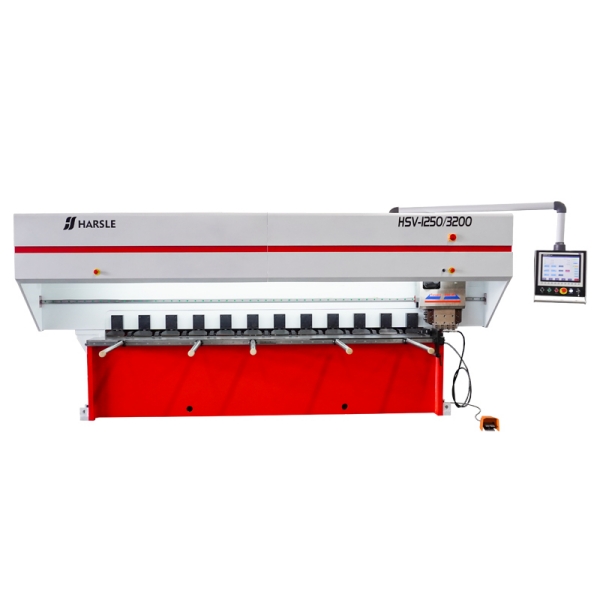
Basic Components and Working Principles
The V grooving machine is a precision tool that consists of several key components, each playing a crucial role in the grooving process. Understanding these components and their working principle is essential for optimizing the machine’s performance and achieving accurate results.
- Bed and Frame: The bed provides a sturdy and stable platform for supporting the entire V grooving machine. It is usually made of high-quality cast iron or steel to ensure rigidity and minimize vibrations during operation. The frame houses various components, such as the cutting tool, feed system, and control panel, providing a structural framework for the machine’s operation.
- Cutting Tool: At the heart of the V grooving machine is the cutting tool, which is responsible for creating the V-shaped groove in the material. The cutting tool is typically a rotating cutter, often with multiple cutting edges, that can efficiently remove material to form the desired groove shape. These cutting tools may vary based on the material being processed and the complexity of the grooves required.
- Feed System: The feed system controls the movement of the material relative to the cutting tool. It ensures a smooth and precise feed rate, allowing the material to pass through the cutting zone at a consistent speed. The feed system can be manually operated or automated, depending on the machine’s design and complexity.
- Clamping Mechanism: The clamping mechanism secures the material firmly in place during the grooving process. This ensures that the material remains stable and does not shift or vibrate, which could result in inaccurate grooves or potential hazards. The clamping mechanism should be adjustable to accommodate various material sizes and thicknesses.
- Depth Adjustment: V grooving machines often feature a depth adjustment mechanism that allows operators to control the depth of the V-shaped groove. This adjustment is critical to achieving the desired groove dimensions, ensuring the material’s flexibility and integrity without compromising its structural strength.

Working Principle of V Grooving Machines:
The working principle of a V grooving machine revolves around the interaction between the cutting tool and the material. When the machine is powered on, the material is securely clamped in place on the bed. The cutting tool, driven by a motor, starts rotating at high speeds.
As the material is fed through the cutting zone, the rotating cutter comes into contact with the material’s surface, gradually removing material along the cutting path. The shape of the cutting tool’s edge determines the V-shaped groove’s angle and dimensions. The feed system ensures a smooth and steady movement of the material through the cutting zone, allowing the cutter to create a continuous and consistent groove.
The depth adjustment feature enables operators to control the groove’s depth, accommodating specific design requirements and material properties. The combination of precise feed control and depth adjustment results in clean, accurate, and uniform V-shaped grooves on the material’s surface.
V grooving machines can be operated manually, where the operator controls the feed rate and depth adjustments, or they can be equipped with CNC technology, allowing for automated and programmable control of the entire grooving process. This automation enhances accuracy, efficiency, and repeatability, making CNC-equipped V grooving machines ideal for high-volume production and complex grooving patterns.
Types of V Grooving Machines
V grooving machines are versatile tools that play a significant role in various industries, offering precise and efficient grooving capabilities on different materials. These machines come in various types, each designed to cater to specific applications and production requirements. Understanding the different types of V grooving machines can help businesses make informed decisions about which machine best suits their needs.

- Manual V Grooving Machines: Manual V grooving machines are the simplest and most basic type available. They are operated by skilled operators who manually adjust the material’s feed rate and depth of cut. Manual machines are suitable for low to medium-volume production, making them a cost-effective choice for small-scale operations. These machines are commonly used in workshops and smaller manufacturing setups, where the grooving requirements are relatively straightforward.
Pros:
Cost-effective for small-scale operations.
Easy to operate and maintain.
Suitable for simple grooving tasks.
Cons:
Limited automation and productivity compared to CNC machines.
Requires skilled operators for precise grooving.
- CNC (Computer Numerical Control) V Grooving Machines: CNC V grooving machines are advanced models that utilize computer numerical control technology to automate and streamline the grooving process. These machines offer higher precision, greater efficiency, and increased productivity compared to manual machines. The CNC system allows users to program and control the grooving operation, ensuring consistent and repeatable results. CNC V grooving machines are ideal for high-volume production and complex grooving patterns.
Pros:
High precision and repeatability.
Automated operation for increased productivity.
Versatility to handle complex grooving patterns.
Cons:
Higher initial investment compared to manual machines.
Requires skilled CNC operators for programming and maintenance.
- 3D V Grooving Machines: 3D V grooving machines are specialized models that can produce grooves with three-dimensional shapes and patterns. These machines are often equipped with additional axis movements, enabling them to create intricate grooves on curved surfaces, cylindrical objects, and complex three-dimensional components. 3D V grooving machines find applications in industries like aerospace, automotive, and sculpture manufacturing, where complex and curved grooves are required.
Pros:
Ability to create grooves on curved and complex surfaces.
Suitable for three-dimensional grooving applications.
Enables innovative and artistic designs.
Cons:
Higher complexity and cost compared to standard V grooving machines.
Limited applicability to industries with specific 3D grooving needs.
- Hybrid V Grooving Machines: Hybrid V grooving machines combine the capabilities of V grooving with other machining processes, such as routing, milling, or laser cutting. These machines offer a more comprehensive solution for manufacturing intricate designs and complex parts that require multiple machining operations. Hybrid V grooving machines are versatile and adaptable to various materials and design requirements.
Pros:
Versatility for handling multiple machining processes.
Enhanced capabilities for complex designs and parts.
Improved efficiency and reduced production time.
Cons:
Higher initial investment due to added functionalities.
Requires additional training for operating and programming multiple processes.
In conclusion, the various types of V grooving machines cater to different production needs and applications. Manual V grooving machines are cost-effective for simple tasks, while CNC machines offer automation and precision for high-volume production. 3D V grooving machines excel in complex three-dimensional grooving, and hybrid machines integrate multiple machining processes for versatility and efficiency. Businesses should carefully assess their requirements and production goals to select the most suitable V grooving machine for their specific needs, optimizing productivity and achieving superior grooving results.

Key Features and Specifications
V grooving machines are precision tools designed to create V-shaped grooves on various materials, offering multiple applications in industries like metal fabrication, sign making, woodworking, and more. When considering the purchase of a V grooving machine, understanding the key features and specifications is essential to ensure the machine meets specific production requirements and delivers optimal results. Below are some crucial features and specifications to consider when selecting a V grooving machine.
- Cutting Capacity and Depth: The cutting capacity refers to the maximum thickness and width of the material that the machine can process. It is essential to choose a machine that can handle the material sizes commonly used in your production. The depth of cut capability determines the maximum depth of the V-shaped groove the machine can create. It’s crucial to match the depth of cut to your project requirements to achieve the desired material flexibility and appearance.
- Material Compatibility: Different V grooving machines are designed to work with specific materials, such as metals, wood, plastics, or composites. Ensure the machine is compatible with the materials commonly used in your industry to achieve optimal results and avoid potential damage to the machine or the material.
- Precision and Tolerance: Precision is a critical factor in V grooving, as it directly impacts the quality of the final product. Look for machines that offer high precision and tight tolerances to ensure accurate grooving and consistency throughout the production process. CNC-equipped machines typically provide superior precision compared to manual machines.
- Safety Features: V grooving machines involve cutting tools and moving parts, which can pose safety risks to operators. Look for machines with comprehensive safety features, such as protective enclosures, emergency stop buttons, and interlocks to prevent accidental activation during setup and maintenance.
- Automation and Control: CNC V grooving machines offer advanced automation and control capabilities, enabling programmed grooving patterns and increased productivity. Consider the level of automation and control required for your production needs and whether CNC technology is necessary to achieve the desired efficiency and complexity.
- Tooling Options: The availability of various tooling options allows the machine to handle different grooving profiles and materials effectively. Check for compatibility with standard and custom tooling options to accommodate specific grooving requirements and future project expansions.
- Machine Size and Footprint: The physical dimensions of the machine, including its height, width, and length, are crucial for fitting the machine into your workshop or production floor. Consider the available space and layout when choosing the machine to ensure smooth integration into your existing setup.
- Feed Rate and Speed: The feed rate determines how fast the material moves through the cutting zone, while the speed refers to the rotation speed of the cutting tool. The right balance of feed rate and speed is crucial for achieving efficient grooving while maintaining optimal groove quality.
- Maintenance and Serviceability: Look for machines that are designed for easy maintenance and serviceability. Regular maintenance is essential to ensure the machine’s longevity and consistent performance over time. Accessible components and clear maintenance instructions facilitate smooth upkeep.
- Cost and Budget Considerations: Finally, the cost of the V grooving machine should be evaluated in conjunction with your budget and expected return on investment. Consider the long-term benefits and potential increase in productivity and product quality when assessing the machine’s value.
In conclusion, understanding the key features and specifications of V grooving machines is crucial for making informed purchasing decisions. Carefully match the machine’s capabilities with your specific production requirements to ensure efficient and precise grooving, ultimately contributing to improved product quality and overall productivity. A well-chosen V grooving machine can become a valuable asset in streamlining manufacturing processes and expanding design possibilities across various industries.

Common Applications of V Grooving Machines
V-grooving machines are versatile tools that find a wide range of applications in various industries due to their ability to create precise V-shaped grooves on different materials. These grooves enhance the material’s flexibility and aesthetics, making them valuable assets in multiple manufacturing and design processes. Let’s explore some of the common applications of V grooving machines:
- Metal Fabrication: V grooving machines play a crucial role in metal fabrication industries, where they are used to create V-shaped grooves on metal sheets and plates. These grooves improve the material’s bending capabilities, allowing it to be easily formed and shaped into desired components. Metal fabricators use V grooving machines to create grooves for bending metal sheets into channels, angles, and architectural elements.
- Sheet Metal Processing: In addition to metal fabrication, V grooving machines are widely employed in sheet metal processing applications. They are used to groove metal sheets for specific purposes, such as forming flanges, creating decorative designs, and preparing joints for welding. V grooving machines enable precision and consistency in sheet metal processing, resulting in high-quality finished products.
- Sign Making: V grooving machines are extensively used in the sign-making industry to create dimensional signs with sharp edges and clean corners. By grooving the sign material, such as acrylic, aluminum, or PVC, sign makers can easily fold and assemble three-dimensional letters and shapes. This technique produces visually appealing and professional-looking signs, commonly seen in advertising, branding, and architectural signage.
- Woodworking: V grooving machines have also found their way into the woodworking industry. They are utilized to create decorative V-shaped grooves on wooden panels, doors, and furniture components. These grooves add texture and visual interest to wooden surfaces, enhancing the overall aesthetics of the finished product.
- Glass and Acrylic Fabrication: V grooving machines are employed in the glass and acrylic fabrication industries to create precise V-shaped grooves on these materials. Grooved glass and acrylic panels are commonly used in architectural designs, partitions, and decorative elements.
- Architectural Designs: V grooving machines contribute to architectural designs by enabling the creation of innovative and intricate patterns on various materials. Architects and designers can use grooved materials to add unique textures and dimensions to walls, ceilings, and exterior facades.
- Aerospace and Automotive Industries: In the aerospace and automotive industries, V grooving machines are utilized to create specialized components with intricate designs and precise grooves. These grooves are essential for achieving lightweight structures and aerodynamic shapes, contributing to the overall performance and efficiency of aerospace and automotive products.
- General Fabrication and Manufacturing: V grooving machines have a broad application in general fabrication and manufacturing processes. They are used to create grooves on different materials for various purposes, such as improving flexibility, forming edges, and enhancing the structural integrity of components.
In conclusion, V grooving machines offer diverse applications across several industries, ranging from metal fabrication and sheet metal processing to sign making, woodworking, and architectural designs. These machines provide precise grooving capabilities, enabling manufacturers and designers to achieve high-quality and aesthetically pleasing results. By streamlining production processes and expanding design possibilities, V grooving machines continue to play a pivotal role in modern manufacturing and creative industries.


