














Pascal’s Law and Its Practical Application in Hydraulic Presses


In the world of heavy industrial manufacturing, specifically within sheet metal fabrication, the ability to generate immense force with precision is the cornerstone of production. At the heart of this capability lies a fundamental principle of fluid mechanics: Pascal’s Law. Named after the 17th-century French mathematician and physicist Blaise Pascal, this law describes how pressure is transmitted through an enclosed fluid. For mechanical engineers and factory managers, understanding this principle is not just an academic exercise; it is the key to mastering the operation, maintenance, and selection of hydraulic presses. These machines, capable of exerting thousands of tons of force to bend, punch, or draw thick steel plates, are direct physical manifestations of Pascal’s insights into hydrostatic pressure. This article provides a comprehensive technical breakdown of Pascal’s Law, its mathematical foundations, and its critical role in the design and operation of modern hydraulic fabrication equipment.
Understanding the Basics of Pascal’s Law
Pascal’s Law, also known as the Principle of Transmission of Fluid-Pressure, states that pressure exerted anywhere in a confined incompressible fluid is transmitted equally in all directions throughout the fluid such that the pressure ratio remains the same. In practical terms, this means that if you apply a force to a small area of a liquid-filled container, that pressure is felt by every square inch of the interior surface of that container. In an industrial hydraulic press, the fluid used is typically a high-grade hydraulic oil, chosen for its incompressibility and lubricating properties. Unlike gases, which compress under load, liquids maintain their volume, allowing them to act as a rigid yet flexible link for power transmission. This characteristic allows engineers to move power from a small, high-speed pump to a large, high-force actuator with minimal loss, provided the system is properly sealed and maintained.
Pascal’s Law is the fundamental bridge between low-force input and high-tonnage output, making it the most efficient method for moving massive loads in a controlled fabrication environment.
Why Pascal’s Law Matters in Sheet Metal Fabrication
The significance of Pascal’s Law in sheet metal fabrication cannot be overstated. Unlike mechanical presses that rely on the kinetic energy of a flywheel and the mechanical advantage of a crankshaft, hydraulic presses provide constant force throughout the entire stroke. This is made possible by the uniform distribution of pressure described by Pascal. In operations like deep drawing or complex bending, where the material must flow into a die over a specific distance, the ability to maintain a steady, peak pressure is essential for part quality and structural integrity. Furthermore, because pressure is transmitted equally, hydraulic systems allow for the synchronization of multiple cylinders. This is vital in large-scale press brakes where two or more hydraulic rams must move in perfect unison to ensure a straight bend across a long sheet of metal. Without the predictable nature of fluid pressure, achieving the tolerances required in modern aerospace or automotive manufacturing would be nearly impossible.
Key Factors to Consider in Hydraulic Press Design
When designing or purchasing a press based on Pascal’s Law, several technical factors must be evaluated to ensure the system meets the required performance specifications. First is the system pressure rating, usually measured in Bar or PSI. Most industrial hydraulic presses operate between 200 and 350 Bar. Higher pressures allow for more force with smaller cylinders, but they also increase the risk of seal failure and require more robust piping. Second is the cylinder bore diameter. Since force is the product of pressure and area, the size of the ram is the primary determinant of the machine’s tonnage. Third, engineers must account for the fluid’s bulk modulus, which is a measure of its resistance to compression. While we treat hydraulic oil as incompressible in basic calculations, at very high pressures, slight compression can occur, leading to ‘spring’ in the system that may affect precision. Finally, thermal management is crucial. As fluid moves through valves and orifices, friction generates heat. If the oil temperature rises too high, its viscosity drops, leading to internal leakage and a reduction in the effective pressure transmission.
Technical Calculations: Applying Pascal’s Law to Press Force
To apply Pascal’s Law in an engineering context, we use the fundamental formula: P = F / A, where P is pressure, F is force, and A is the cross-sectional area of the piston. In a hydraulic system with two connected cylinders, the pressure is constant (P1 = P2), leading to the ratio: F1 / A1 = F2 / A2. This allows us to calculate the ‘Mechanical Advantage’ of the press. For example, if a small pump piston has an area of 10 square centimeters and applies a force of 1,000 Newtons, it generates a pressure of 100 N/cm2. If this pressure is transmitted to a large ram piston with an area of 1,000 square centimeters, the resulting output force (F2) is calculated as: F2 = P * A2 = 100 N/cm2 * 1,000 cm2 = 100,000 Newtons. In this scenario, the hydraulic system has multiplied the input force by a factor of 100. Below is a data table showing the relationship between pressure, cylinder diameter, and force output.
| Cylinder Bore (mm) | Area (cm2) | Pressure at 250 Bar (N) | Tonnage (Metric Tons) |
|---|---|---|---|
| 100 | 78.54 | 1,963,500 | 200.2 |
| 150 | 176.71 | 4,417,750 | 450.5 |
| 200 | 314.16 | 7,854,000 | 800.9 |
| 250 | 490.87 | 12,271,750 | 1251.4 |
| 300 | 706.86 | 17,671,500 | 1802.1 |
Comparison: Hydraulic vs. Mechanical Press Systems
While Pascal’s Law is the foundation of hydraulic systems, it is helpful to compare these to mechanical alternatives to understand when hydraulics is the superior choice. Mechanical presses excel in high-speed, repetitive blanking operations because their cycle times are generally faster. However, they lack the flexibility of hydraulic presses. Because a mechanical press is driven by a linkage, its maximum force is only available at the very bottom of the stroke. In contrast, a hydraulic press can deliver its full rated tonnage at any point in the ram’s travel. This makes hydraulic systems much safer for tooling, as the pressure can be limited by a relief valve to prevent overloading. If a mechanical press encounters a workpiece that is too thick, it may jam at bottom dead center or break the frame; a hydraulic press will simply stop once the set pressure is reached.
| Tính năng | Hydraulic Press (Pascal’s Law) | Mechanical Press (Flywheel) |
|---|---|---|
| Force Delivery | Full tonnage at any stroke position | Peak tonnage only at stroke bottom |
| Speed | Adjustable and variable | High speed, fixed cycle |
| Chiều dài nét vẽ | Easily adjustable | Fixed by crank radius |
| Overload Protection | Inherent (Relief Valves) | Requires mechanical shear pins |
| Maintenance | Focus on seals and oil quality | Focus on bearings and gears |
Step-by-Step Guide to Selecting Cylinder Dimensions
When designing a hydraulic press for a specific fabrication task, engineers follow a systematic process to apply Pascal’s Law correctly. Step 1: Determine the required force. This is usually based on the material’s tensile strength, thickness, and the length of the bend or punch. Step 2: Choose an operating pressure. Standard industrial systems often target 210 Bar (approx. 3000 PSI) for a balance between component cost and power density. Step 3: Calculate the required piston area using A = F / P. Step 4: Convert the area to a diameter (D = square root of (4A/pi)) and select the nearest standard cylinder size. Step 5: Verify the pump flow rate. While Pascal’s Law governs the force, the volume of fluid moved per second determines the ram speed. A larger cylinder requires more oil volume to move the same distance, which may necessitate a larger pump and motor. Step 6: Factor in safety margins. Engineers typically add a 20 percent buffer to the calculated tonnage to account for friction losses and variations in material properties.
Common Mistakes to Avoid in Hydraulic Operations
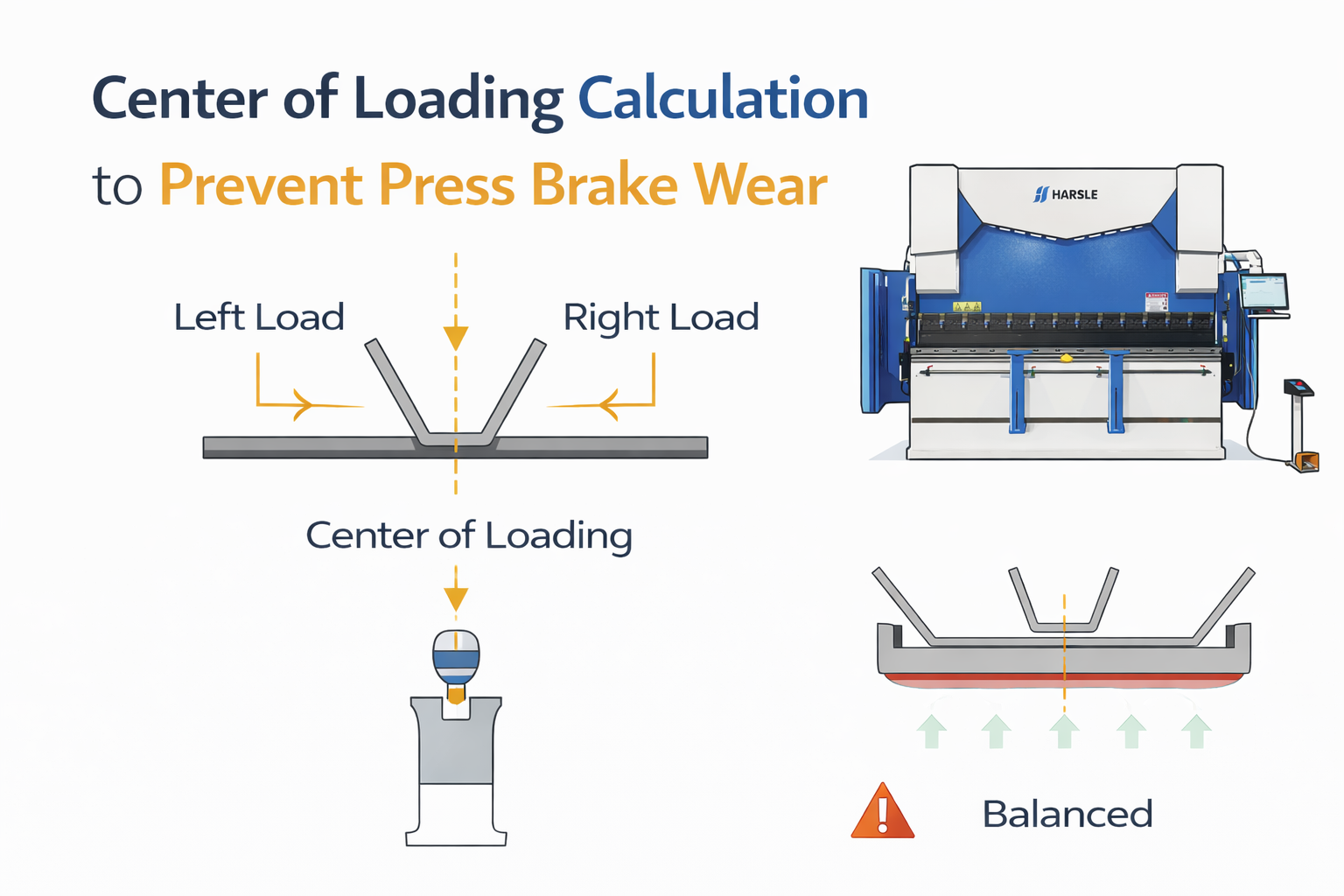
Even with a firm grasp of Pascal’s Law, operational errors can compromise machine performance. One common mistake is ignoring the presence of air in the hydraulic system. Air is compressible, which violates the ‘incompressible fluid’ requirement of Pascal’s Law. This leads to ‘spongy’ operation, erratic movement, and a phenomenon known as cavitation, which can erode metal surfaces within the pump. Another error is using the wrong hydraulic fluid or failing to maintain fluid cleanliness. Contaminants can score cylinder walls, causing internal bypass where fluid leaks past the piston seal. This leakage means the pressure is not transmitted ‘undiminished,’ leading to a loss of tonnage. Finally, many operators overlook the effect of side-loading on the ram. Pascal’s Law assumes force is applied axially. If the load is off-center, it creates lateral forces that can damage bushings and seals, leading to premature failure and safety hazards.
In a hydraulic system, the oil is not just a lubricant; it is a structural component of the machine that must be kept pristine to ensure the laws of physics work in your favor.
Industry Applications of High-Pressure Hydraulics
The applications of Pascal’s Law are found across nearly every heavy industry. In the automotive sector, hydraulic presses are used to stamp out body panels from large rolls of steel. The uniform pressure ensures that the panels have a consistent thickness and finish. In the aerospace industry, deep drawing presses use hydraulic force to shape aluminum and titanium components into complex aerodynamic shapes. Another vital application is in the manufacturing of heavy construction equipment, where press brakes with capacities exceeding 1,000 tons use Pascal’s Principle to bend thick wear-resistant plates for excavator buckets and bulldozer blades. Beyond metalworking, Pascal’s Law is used in powder metallurgy to compress metallic powders into solid shapes, requiring precise pressure control to ensure uniform density throughout the part.
Phần kết luận
Pascal’s Law remains one of the most elegant and practical principles in mechanical engineering. By providing a predictable method for force multiplication through fluid transmission, it enables the high-tonnage operations that define modern sheet metal fabrication. For the engineer or factory owner, a deep understanding of this law is essential for optimizing machine performance and ensuring long-term reliability. From the initial calculation of cylinder bore to the daily monitoring of system pressure and oil quality, every aspect of hydraulic press operation is a tribute to the physics of fluid mechanics. As we move toward more automated and CNC-controlled fabrication environments, the core principle remains the same: the undiminished transmission of pressure through a confined fluid continues to provide the muscle behind the world’s most demanding manufacturing tasks.
Câu hỏi thường gặp
How does Pascal’s Law allow for force multiplication in a press?
By applying pressure to a small input area and transmitting that same pressure to a much larger output area, the resulting force is multiplied by the ratio of the two areas.
Why is hydraulic oil used instead of water in these systems?
Hydraulic oil is used because it provides essential lubrication for moving parts, prevents internal corrosion, and has a higher boiling point and better viscosity stability than water.
Can a hydraulic press lose tonnage over time?
Yes, if internal seals wear out, fluid can bypass the piston. This results in a loss of effective pressure transmission, meaning the press can no longer reach its rated tonnage.
What is the role of the relief valve in a hydraulic press?
The relief valve acts as a safety limit; once the system reaches a pre-set maximum pressure (as dictated by Pascal’s Law), the valve opens to divert oil, preventing structural damage.
Does the speed of the press affect the pressure output?
According to Pascal’s Law, static pressure is independent of speed. However, in a dynamic system, flow rate determines speed, while the resistance of the workpiece determines the actual pressure generated.