














Hydraulic Press vs. Mechanical Press: Engineering Buying Guide

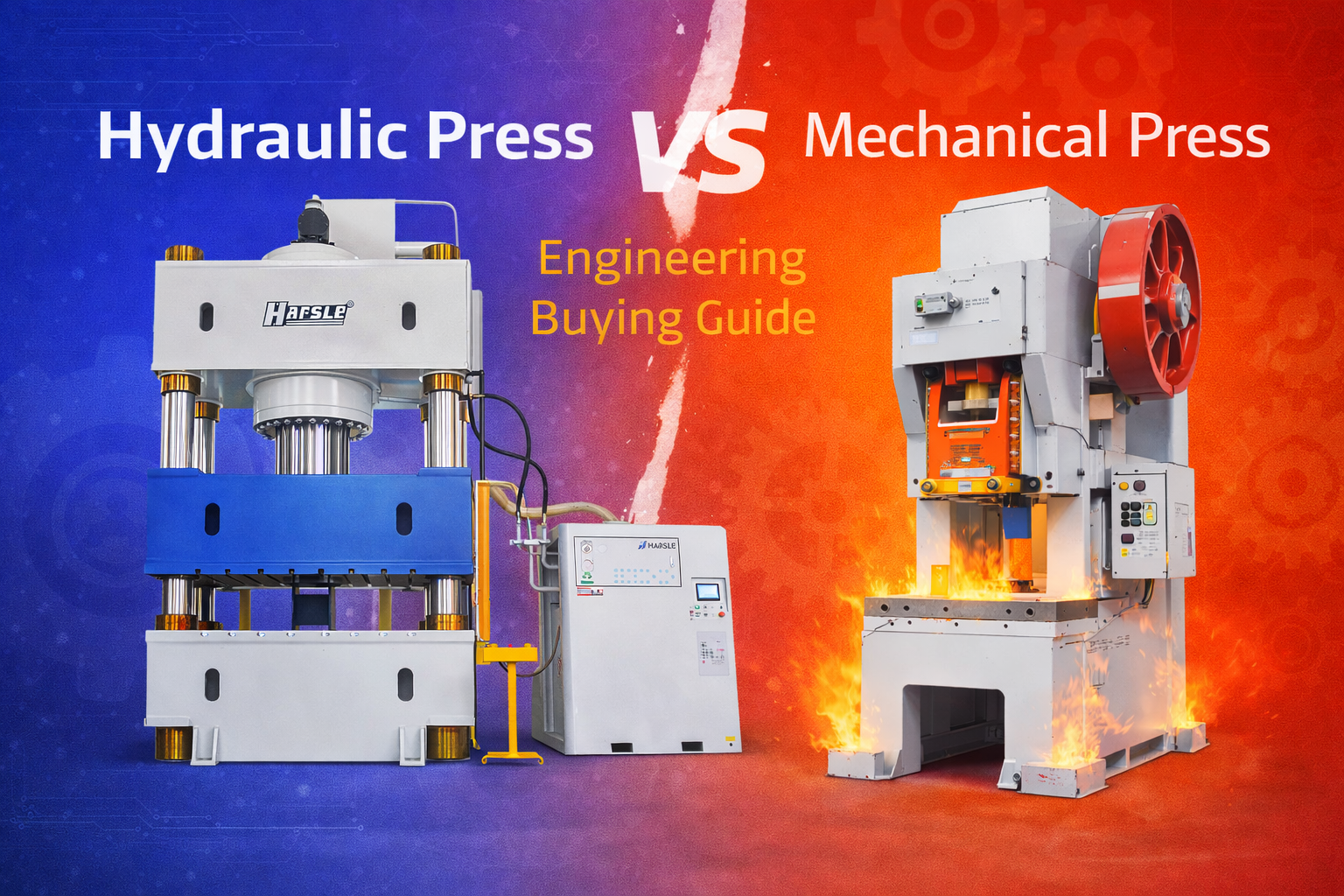
In the high-stakes world of sheet metal fabrication, selecting the optimal machinery for your facility often centers on a fundamental engineering debate: Hydraulic Press vs. Mechanical Press. Both machines serve the core purpose of forming, blanking, and punching metal, but they operate on vastly different physical principles. A mechanical press relies on a flywheel and a mechanical linkage to deliver rapid, high-energy impact, while a hydraulic press utilizes fluid power to provide controlled, consistent force throughout the entire stroke. For factory owners and purchasing managers, the choice isn’t merely about cost; it is about matching the machine’s energy delivery profile to the specific material properties and production volumes required for their projects. Understanding these nuances is critical for maintaining a competitive edge and ensuring long-term operational efficiency.
Understanding Hydraulic Press vs. Mechanical Press Fundamentals
To differentiate these two giants of the shop floor, we must first look at their internal drive systems. A mechanical press converts the rotational energy of a motor-driven flywheel into the linear motion of a ram. This is typically achieved via a crankshaft, eccentric shaft, or toggle mechanism. The energy available in a mechanical press is a function of the flywheel speed and mass, meaning that the full tonnage capacity is only reached at a very specific point near the bottom of the stroke, known as Bottom Dead Center (BDC). This makes them exceptional for high-speed, repetitive tasks where the work is performed in a short distance.
Conversely, a hydraulic press operates based on Pascal’s Law, which states that pressure applied to a confined fluid is transmitted undiminished in every direction. Using hydraulic pumps, valves, and cylinders, these machines generate force that can be maintained consistently from the top of the stroke to the bottom. Unlike their mechanical counterparts, hydraulic presses allow for complete control over the ram’s speed, pressure, and position at any point during the cycle. This flexibility is a hallmark of hydraulic technology, making it the preferred choice for complex forming operations that require a slow, steady squeeze rather than a rapid hit.
Why This Topic Matters in Sheet Metal Fabrication
The decision between a Hydraulic Press vs. Mechanical Press directly impacts a shop’s versatility and profitability. In modern fabrication, the diversity of materials—from high-strength automotive steels to thin aluminum alloys—requires machines that can handle different sheet thickness and material tensile strength profiles. A mechanical press might excel at producing 10,000 simple washers in an hour, but it could struggle with a deep-drawn part that requires the material to flow slowly into a die without tearing. Furthermore, the tonnage capacity required for a job is handled differently by each machine; exceeding the capacity of a mechanical press can result in catastrophic structural failure or a ‘stuck on bottom’ scenario, whereas a hydraulic press simply triggers a relief valve.
In metal forming, the distinction between ‘hitting’ a part and ‘squeezing’ it defines the final quality of the grain structure and the accuracy of the finished geometry.
Operational Differences: Hydraulic Press vs. Mechanical Press
When evaluating these machines, several technical factors must be considered to ensure the equipment meets the shop’s specific needs. These factors include stroke length, speed, and the point at which full tonnage is available.
- Stroke Control: Hydraulic presses offer variable stroke lengths. You can set the ram to travel only as far as needed for the part, which saves time. Mechanical presses have a fixed stroke length determined by the throw of the crankshaft.
- Tonnage Availability: This is perhaps the most significant difference. A 200-ton hydraulic press can deliver 200 tons of force at the top, middle, or bottom of its stroke. A 200-ton mechanical press only delivers that rated force a few millimeters above BDC.
- Speed and Productivity: Mechanical presses are significantly faster for high-volume blanking. Their cycle times are measured in strokes per minute (SPM), often reaching hundreds of cycles. Hydraulic presses are slower due to the time required to move fluid, though modern high-speed valves have closed this gap significantly.
- Setup and Maintenance: Hydraulic presses are generally easier to set up for new dies because of their adjustable stroke and pressure. However, they require rigorous hydraulic fluid maintenance. Mechanical presses require careful maintenance of clutches, brakes, and lubrication systems for the moving shafts.
Technical Explanation and Engineering Calculations
To truly understand the Hydraulic Press vs. Mechanical Press comparison, we must look at the math. The tonnage required for a specific job depends on the perimeter of the cut, the material thickness, and the tensile strength. The formula for blanking tonnage is:
T = (L x t x UTS) / 2000
Where:T = Tonnage (tons); L = Total length of the cut or perimeter (inches); t = Sheet thickness (inches); UTS = Ultimate Tensile Strength of the material (PSI).
For a hydraulic press, once you calculate T, you simply select a machine that meets or exceeds this value across its entire stroke. For a mechanical press, you must also consider the ‘Tonnage Rating Point.’ If a mechanical press is rated for 100 tons at 0.125 inches above BDC, and your material is 0.25 inches thick, the press may only be capable of delivering 60 tons at the initial point of contact. This often leads to the need for a ‘larger’ mechanical press to do the same job a ‘smaller’ hydraulic press could handle.
Choosing the Right System: Hydraulic Press vs. Mechanical Press Comparison
The following table provides a technical comparison of the two technologies across key performance metrics:
| Funkce | Hydraulický lis | Mechanical Press |
|---|---|---|
| Force Delivery | Constant throughout the stroke | Peak force only at Bottom Dead Center |
| Speed | Slower, controlled velocity | Very high, rapid cycle times |
| Overload Protection | Built-in (relief valves) | Requires shear plates or monitors |
| Délka zdvihu | Fully adjustable | Fixed by crankshaft geometry |
| Maintenance | Seal and oil management | Clutch, brake, and bearing care |
| Best Use Case | Deep drawing, complex forming | High-volume blanking, punching |
Step-by-Step Guide to Selecting Your Press
If you are currently deciding between a Hydraulic Press vs. Mechanical Press, follow these steps to ensure a sound engineering investment:
- Analyze the Part Geometry: Does the part require a deep draw or a simple punch? Deep draws require the sustained pressure of a hydraulic system.
- Determine Production Volume: If you need to produce millions of parts annually with minimal variation, the speed of a mechanical press is unbeatable. For short runs or diverse part catalogs, a hydraulic press is better.
- Evaluate Tooling Costs: Mechanical presses exert high-impact forces that can lead to faster tool wear. Hydraulic presses offer a gentler engagement, potentially extending the life of your die opening and punches.
- Assess Facility Utilities: Mechanical presses often require massive electrical surges to start the flywheel but are efficient once running. Hydraulic systems may require cooling units for the oil, adding to the floor space requirement.
- Consider Future Flexibility: If your shop plans to expand into different materials or thicker gauges, the adjustable tonnage of a hydraulic press provides a broader operational envelope.
Common Mistakes to Avoid
Many purchasing managers fall into the trap of buying based on price alone, but the ‘cheaper’ machine often leads to higher operational costs. A common mistake in the Hydraulic Press vs. Mechanical Press debate is ignoring the ‘rated distance’ of a mechanical press. Buying a 100-ton mechanical press for a job that requires 100 tons of force half an inch up from the bottom will result in a broken crankshaft or a stalled motor. Another mistake is underestimating the maintenance of hydraulic systems; neglecting oil changes or filter replacements can lead to valve failures that are costly to diagnose and repair. Finally, ensure your backgauge system and automation are compatible with the press’s cycle time; a high-speed mechanical press is useless if your feeding system cannot keep up.
Industry Applications
In the automotive industry, mechanical presses are the workhorses of the stamping plant, churning out body panels and structural brackets at lightning speed. However, for specialized components like fuel tanks or decorative trim, hydraulic presses are used for their precision in deep drawing and hydroforming. In the aerospace sector, where bending radius requirements are extremely tight and materials like titanium are common, hydraulic presses are favored for their ability to provide the slow, controlled deformation necessary to prevent material cracking and maintain structural integrity.
Modern advancements in servo-hydraulic systems are beginning to bridge the gap, offering the speed of mechanical presses with the control of hydraulic power.
Závěr
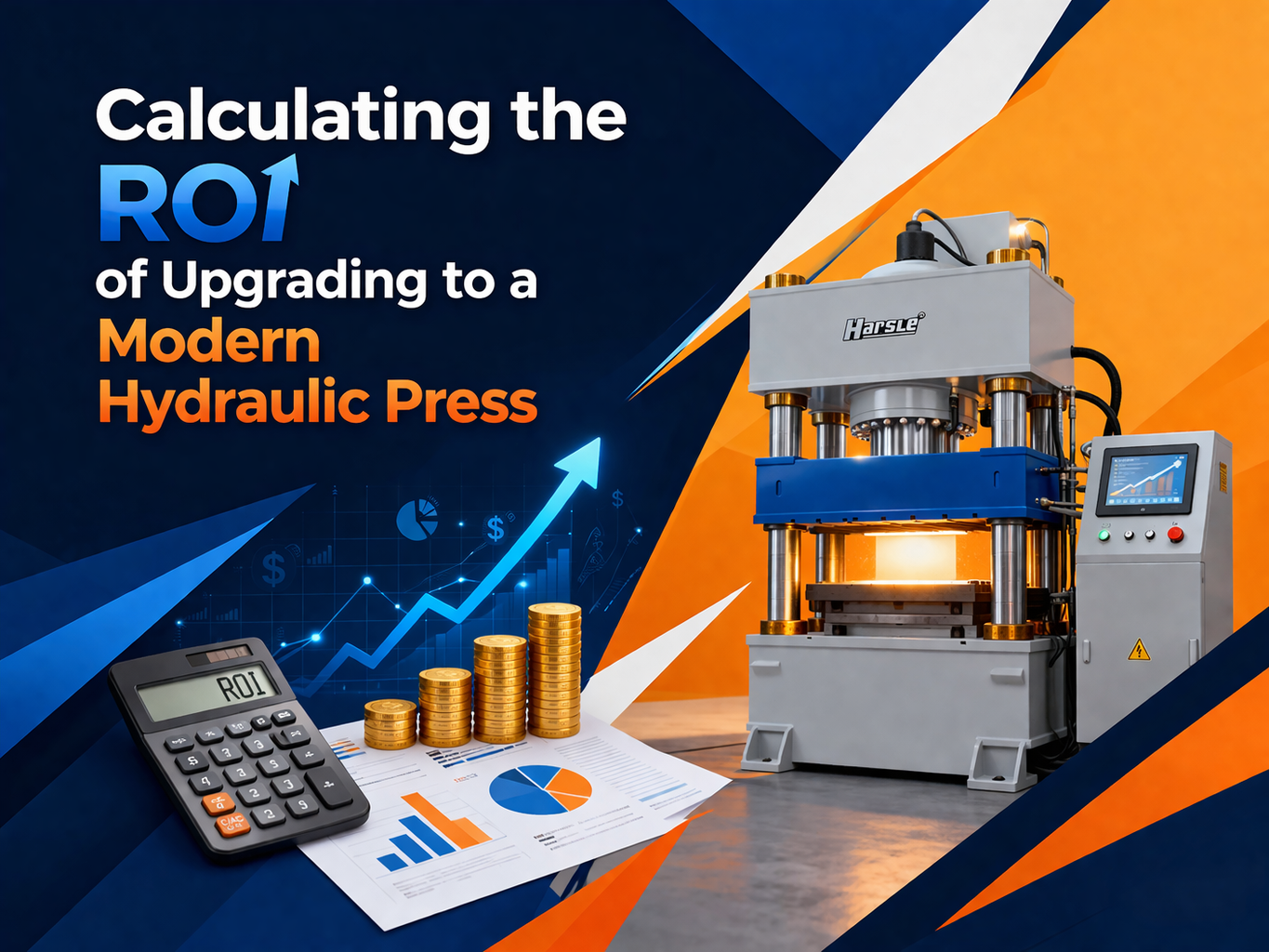
The choice between a Hydraulic Press vs. Mechanical Press ultimately depends on the specific goals of your metal fabrication shop. If your priority is maximum throughput for high-volume, thin-gauge parts, the mechanical press remains the king of the floor. However, if your shop values versatility, precision in forming, and the ability to handle a wide range of sheet thickness and tonnage capacity requirements, the hydraulic press is the superior engineering choice. By carefully calculating your tonnage needs and considering the long-term maintenance profiles of each system, you can ensure that your investment drives productivity and quality for years to come.
FAQ
Can a hydraulic press be as fast as a mechanical press?
Generally, no. While high-speed hydraulic presses with advanced valves exist, they cannot match the rapid strokes-per-minute of a mechanical flywheel system for high-volume blanking.
What is the risk of overloading a mechanical press?
Overloading a mechanical press can result in the ram getting stuck at Bottom Dead Center (BDC), or in severe cases, cracking the frame or shattering the crankshaft. Hydraulic presses simply stop and release pressure via safety valves.
Which press is better for deep drawing applications?
The hydraulic press is superior for deep drawing because it provides consistent tonnage and controlled speed throughout the entire stroke, allowing the metal to flow properly into the die.
Does a hydraulic press require more maintenance?
It requires different maintenance. You must monitor oil cleanliness, temperature, and seal integrity. Mechanical presses require maintenance of the clutch/brake system and frequent lubrication of rotating parts.
Is energy consumption different between the two types?
Mechanical presses are more energy-efficient for continuous high-speed runs. Hydraulic presses consume more energy to maintain pressure, though modern servo-pump hydraulics have significantly improved their efficiency.