
















Ein vollständiger Leitfaden zur Maximierung der Effizienz mit moderner CNC-Abkantpressenautomatisierung

In this article, we will explore how automation enhances CNC press brakes, the benefits of incorporating automation, the key automated features that boost efficiency, and practical tips for manufacturers looking to maximize their production workflow with this technology.
In today’s fast-paced manufacturing world, the demand for efficiency, precision, and flexibility is higher than ever. Industries like automotive, aerospace, and metal fabrication rely on advanced machinery to produce high-quality components while minimizing costs and production times. One such piece of equipment that has transformed modern fabrication is the CNC (Computer Numerical Control) press brake. With the integration of automation, CNC press brakes are revolutionizing how manufacturers bend, shape, and process metal, improving both speed and accuracy.
The Role of Automation in CNC Press Brakes
Automation in CNC press brakes refers to the use of advanced software, sensors, and robotic assistance to streamline the bending process. Automation can manage various aspects of the press brake’s operation, such as tool changes, material handling, and even quality checks. By minimizing human intervention, automation enhances both efficiency and consistency in production.
Key Components of CNC Press Brake Automation:
- Automated Tool Changers
Automated tool changers allow the press brake to switch between different punch and die sets without manual intervention. This is especially beneficial for manufacturers dealing with multiple types of bends or complex jobs that require different tools. Automated tool changing reduces setup time and increases machine uptime, leading to faster production cycles. - Robotic Arms for Material Handling
Robots are increasingly being integrated into CNC press brake systems to handle material loading and unloading. This minimizes manual labor, reduces the risk of workplace injuries, and allows for continuous production, even during long shifts. Robotic arms also ensure precise placement of workpieces, contributing to higher accuracy. - Sensors and Cameras for Quality Control
Advanced sensors and cameras monitor each bending operation to detect any defects or inconsistencies in real time. Automated quality checks ensure that each part meets the required specifications without the need for manual inspection, leading to fewer rejected parts and higher overall quality. - Bend Simulation Software
CNC press brake automation includes software that simulates the bending process before it starts. This helps operators visualize the end result, predict potential errors, and optimize the bending sequence for efficiency. Such simulations reduce trial-and-error and save valuable production time. - Automated Backgauge Adjustments
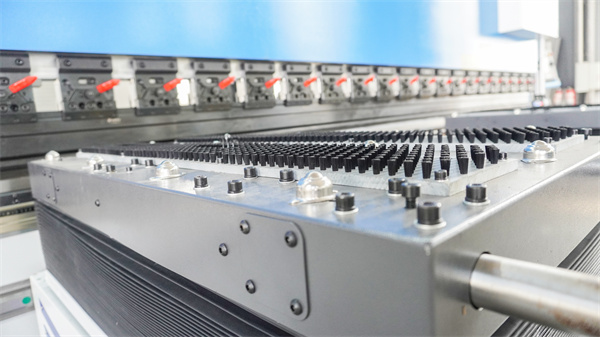
The backgauge determines the positioning of the metal sheet during the bending process. Automated backgauge systems can quickly reposition the sheet based on programmed specifications, improving the speed and accuracy of each bend. This automation also allows the machine to handle more complex geometries and multiple bends in a single part.

Benefits of CNC Press Brake Automation
Automating CNC press brakes offers significant advantages for manufacturers, especially those focused on large-scale production and custom jobs. Here are some key benefits:
1. Increased Production Speed
With automation, CNC press brakes can execute complex bends at a much faster rate than manual machines. Automated tool changers, material handling robots, and efficient programming reduce setup time and allow for continuous production without the need for frequent operator intervention. This not only increases throughput but also shortens lead times, enabling manufacturers to meet tight deadlines.
2. Enhanced Precision and Accuracy
CNC technology already provides exceptional precision, but automation takes it to the next level. Automated systems eliminate the risk of human error in both material handling and tool setup, ensuring that each bend is consistent and within tolerance. Sensors and real-time monitoring systems detect even the smallest deviations, correcting issues before they impact the final product.
3. Improved Flexibility
In industries like aerospace and automotive, where custom parts and small batch production are common, automation allows CNC press brakes to handle a wide variety of jobs without extensive reconfiguration. Automated tool changers and programmable backgauges enable rapid transitions between different part designs, reducing downtime between jobs and maximizing machine utilization.
4. Reduzierte Arbeitskosten
Automation reduces the need for manual labor in tasks like material handling, tool setup, and inspection. This not only lowers labor costs but also frees up skilled operators to focus on more complex tasks, such as programming and overseeing multiple machines. Robotic automation can also work continuously, increasing productivity without additional labor expenses.
5. Improved Safety
One of the key advantages of automation is the reduction of physical labor required to operate the press brake. Robotic arms handle heavy materials, eliminating the risk of injury from manual lifting. In addition, automated systems ensure safer tool changes and prevent accidents caused by human error, making the workplace safer overall.
6. Better Resource Utilization
Automated CNC press brakes optimize the use of materials by minimizing waste. Automated systems can calculate the most efficient bending sequences, reducing scrap material and ensuring that each sheet is used to its full potential. This improves cost-efficiency and reduces environmental impact.

How to Maximize Efficiency with CNC Press Brake Automation
While CNC press brake automation offers tremendous potential, manufacturers need to implement it strategically to fully maximize efficiency. Here are some tips to help you get the most out of your automated press brake system:
1. Invest in Comprehensive Training
Even though automation reduces the need for manual intervention, operators still need to understand how to program and monitor the machines. Providing comprehensive training ensures that operators can take full advantage of the machine’s capabilities and troubleshoot any issues that arise. Advanced training in CNC programming, tool setup, and maintenance is essential to keeping operations running smoothly.
2. Optimize Tooling and Setup
The right tooling plays a critical role in maximizing efficiency. Invest in high-quality tools that can handle different types of bends and materials. Consider modular tooling systems that can be quickly changed or adjusted through automation. In addition, using offline programming software allows operators to prepare setups without stopping the machine, increasing machine uptime.
3. Implement Preventive Maintenance
Automated CNC press brakes are highly reliable, but regular maintenance is still necessary to keep them running at peak performance. Implement a preventive maintenance schedule that includes inspections of hydraulic systems, sensors, and tooling. Regular software updates and calibration checks will also ensure that the machine maintains its precision over time.
4. Leverage Real-Time Data Monitoring
Many automated CNC press brakes come equipped with data monitoring systems that track machine performance in real time. By analyzing this data, manufacturers can identify inefficiencies, predict potential machine failures, and optimize production schedules. Monitoring systems also provide valuable insights into tool wear and material usage, helping reduce waste.
5. Integrate with Other Automated Systems
To further boost efficiency, consider integrating your CNC press brake with other automated systems, such as robotic material handling or a fully automated production line. This allows for seamless transitions between different stages of production, reducing bottlenecks and ensuring a smooth workflow.
The Future of CNC Press Brake Automation
The automation of CNC press brakes is rapidly evolving, with new technologies enhancing both machine capabilities and production efficiency. Future advancements will likely focus on increased connectivity, where press brakes are integrated into smart factory networks that use IoT (Internet of Things) devices to communicate with other machines and monitor overall production in real time.
AI-driven software is also on the rise, with the potential to optimize bending sequences, tool setups, and quality control with minimal human input. As machine learning algorithms improve, CNC press brakes will become even more autonomous, capable of making decisions based on historical data and predictive analytics.
Abschluss
Maximizing efficiency with CNC press brake automation is crucial for manufacturers looking to stay competitive in today’s market. By automating tool changes, material handling, quality control, and more, CNC press brakes can significantly reduce production times, improve precision, and lower labor costs. For manufacturers aiming to take their production to the next level, embracing automation in CNC press brakes is not just an option—it’s a necessity.
Investing in the right automated systems, training, and maintenance will enable companies to fully capitalize on the benefits of automation, driving productivity and profitability for years to come.