















Calculating the ROI of Upgrading to a Modern Hydraulic Press

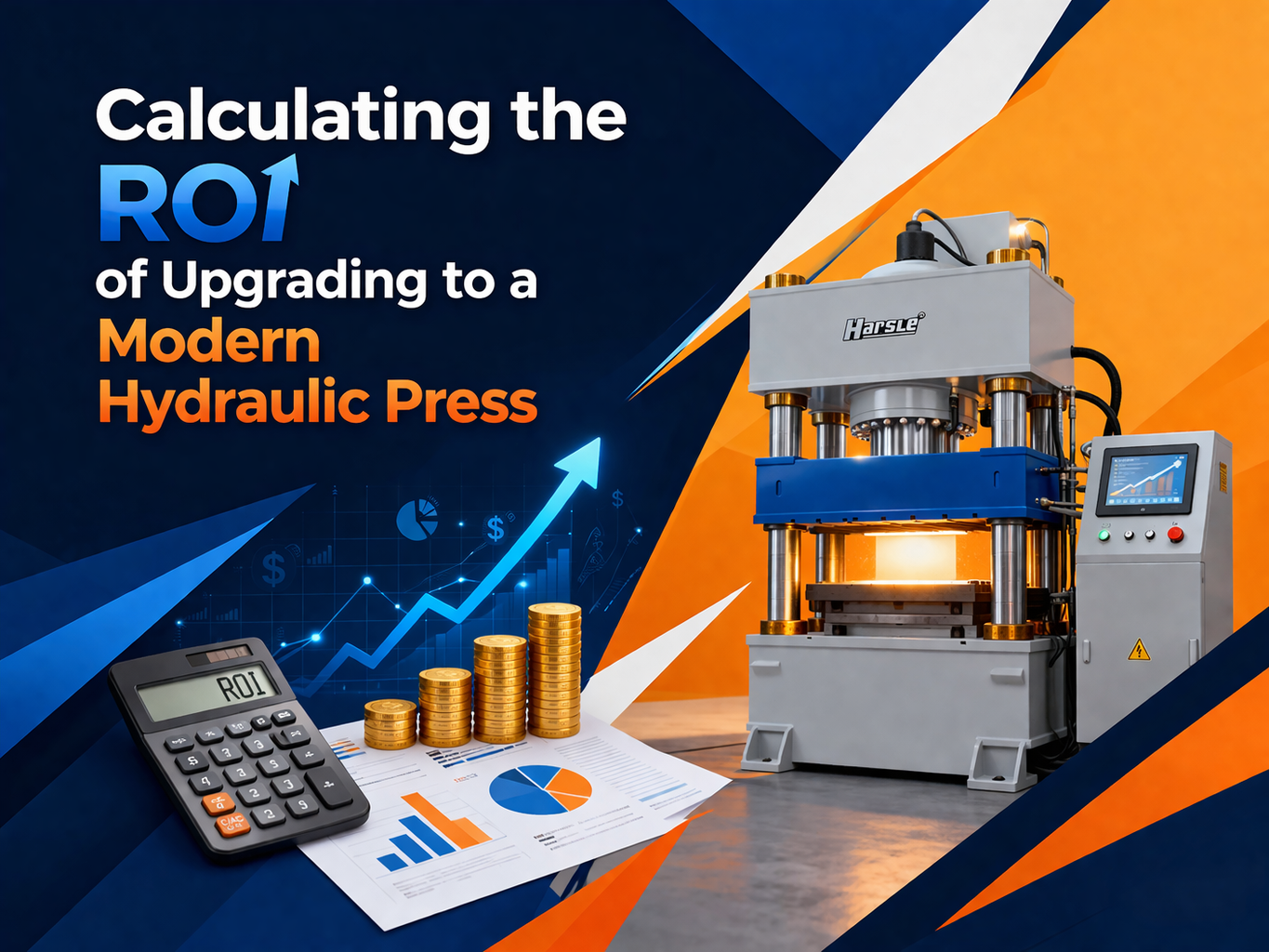
In the competitive landscape of sheet metal fabrication, the decision to replace aging machinery is rarely based on a single factor. For factory owners and mechanical engineers, the transition from legacy equipment to advanced systems is driven by the need for precision, repeatability, and financial sustainability. Calculating the ROI of Upgrading to a Modern Hydraulic Press requires a deep dive into technical specifications, operational efficiency, and long-term cost of ownership. As legacy mechanical or older hydraulic systems reach the end of their effective life cycles, the gap in productivity between old and new technology widens, making a data-driven investment analysis essential for maintaining a competitive edge.
Understanding the Basics of Hydraulic Press Technology
A hydraulic press operates on Pascal’s Principle, where pressure applied to a confined fluid is transmitted undiminished in all directions. While this fundamental physics remains unchanged, the method of execution has evolved significantly. Modern hydraulic presses are no longer simple ‘dumb’ machines; they are sophisticated, CNC-controlled systems integrated with proportional valve technology, high-speed sensors, and often, servo-driven pump systems. Unlike older mechanical presses that rely on a flywheel and fixed stroke, modern hydraulic presses offer variable stroke lengths, programmable dwell times, and precise tonnage control throughout the entire cycle. This flexibility allows for a wider range of applications, from deep drawing to complex multi-stage bending, all within a single workstation.
Why Calculating the ROI of Upgrading to a Modern Hydraulic Press Matters
In a modern production environment, profit margins are often found in the marginal gains of cycle time and material utilization. Calculating the ROI of Upgrading to a Modern Hydraulic Press is critical because it identifies the ‘hidden’ costs of keeping legacy equipment. Older machines often suffer from ‘creep’—a slow decline in accuracy and speed that leads to increased scrap rates and secondary finishing requirements. By quantifying these losses against the capabilities of a new machine, such as a 30 percent reduction in energy consumption or a 50 percent improvement in setup times, engineers can present a compelling business case that extends beyond simple ‘break-fix’ logic. Furthermore, modern equipment often brings safety and compliance benefits that reduce insurance premiums and mitigate the risk of costly workplace accidents.
In the world of precision fabrication, the most expensive machine is the one that sits idle for repairs or produces parts that fail inspection. Real ROI is found at the intersection of uptime and accuracy.
Key Factors for Calculating the ROI of Upgrading to a Modern Hydraulic Press
To perform an accurate ROI analysis, several technical and operational variables must be audited. These factors form the core of the financial model:
- Eficiência energética: Modern servo-hydraulic systems only consume power during the pressing cycle, whereas older systems keep the motor running constantly to maintain fluid pressure.
- Cycle Time and Throughput: Higher approach and return speeds, coupled with CNC-integrated backgauges, significantly reduce the time per part.
- Setup and Changeover: Modern CNC interfaces allow operators to load programs instantly, reducing tool setup time from hours to minutes.
- Maintenance and Reliability: Newer machines feature self-diagnostics and predictive maintenance sensors, reducing unplanned downtime.
- Scrap and Rework: Enhanced precision and repeatable tonnage control mean fewer rejected parts, saving both material costs and labor.
Technical Explanation: Calculating the ROI of Upgrading to a Modern Hydraulic Press
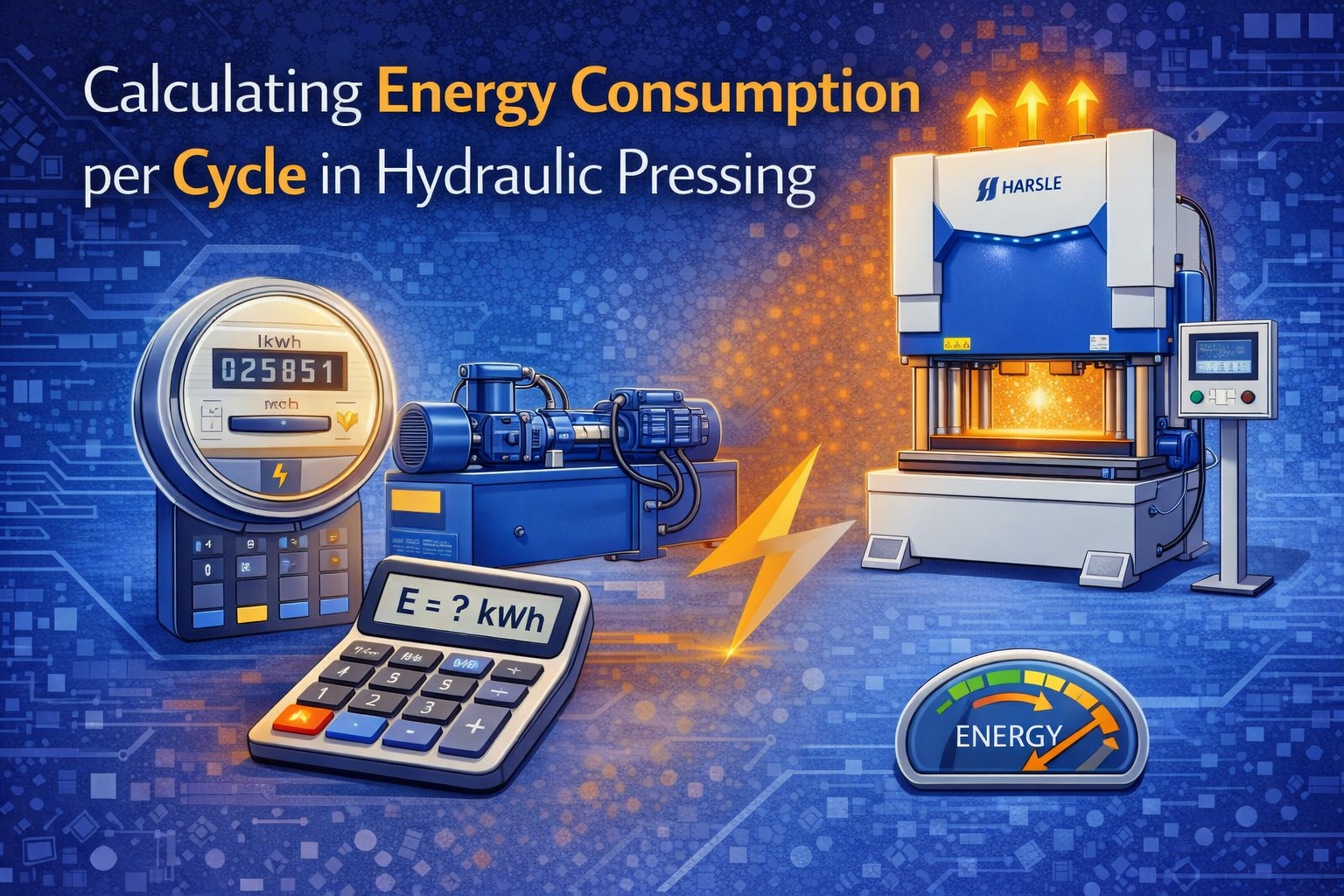
To calculate a precise ROI, we must translate engineering improvements into financial data. One of the most significant metrics is the reduction in energy consumption. The formula for annual energy cost savings is as follows:
Annual Savings = (P_old – P_new) x H x C
Where:
P_old = Average power consumption of the legacy press (kW)
P_new = Average power consumption of the modern press (kW)
H = Annual operational hours
C = Cost per kWh
Another critical calculation is the Tonnage Requirement to ensure the new machine is optimized for the workload. Overspecifying a press leads to wasted energy, while underspecifying leads to premature wear. The simplified formula for required tonnage (P) in a bending or punching operation is:
P = (L x t x S) / 1000
Where:
L = Length of the cut or bend (mm)
t = Material thickness (mm)
S = Shear or tensile strength of the material (N/mm2)
Once the annual savings from energy, labor, and scrap reduction are aggregated, the ROI percentage is calculated over a specific period (usually 3 to 5 years):
ROI (%) = [(Total Savings – Cost of Investment) / Cost of Investment] x 100
Comparison: Legacy Mechanical vs. Modern Servo-Hydraulic Presses
The following table illustrates the technical differences that directly impact the return on investment when moving from traditional equipment to modern servo-hydraulic technology.
| Recurso | Legacy Mechanical Press | Modern Servo-Hydraulic Press | ROI Impact |
|---|---|---|---|
| Power Consumption | High (Constant motor operation) | Low (On-demand power) | Reduces utility costs by 30-60% |
| Stroke Control | Fixed / Crank-driven | Fully programmable CNC | Increased versatility; less scrap |
| Setup Time | Manual (1-2 hours) | Automated/CNC (5-10 mins) | Significant labor cost reduction |
| Maintenance | Reactive (Frequent lubrication) | Predictive (Integrated sensors) | 95%+ Uptime improvement |
| Precisão | +/- 0.5mm | +/- 0.01mm | Eliminates secondary finishing |
A Step-by-Step Guide to Calculating the ROI of Upgrading to a Modern Hydraulic Press
- Audit Current Performance: Document the current cycle times, energy bills, and maintenance logs of your existing press over the last 12 months.
- Identify Production Bottlenecks: Determine if your current machine is the ‘slowest link’ in your production line. Calculate the potential revenue gain if that bottleneck was removed.
- Request Technical Data Sheets: Consult with manufacturers to get specific power consumption and cycle speed data for new models. Use these specs to replace the ‘P_new’ variable in your formulas.
- Quantify Qualitative Gains: Assign a dollar value to improved safety, better floor space utilization, and the ability to take on high-precision contracts that were previously impossible.
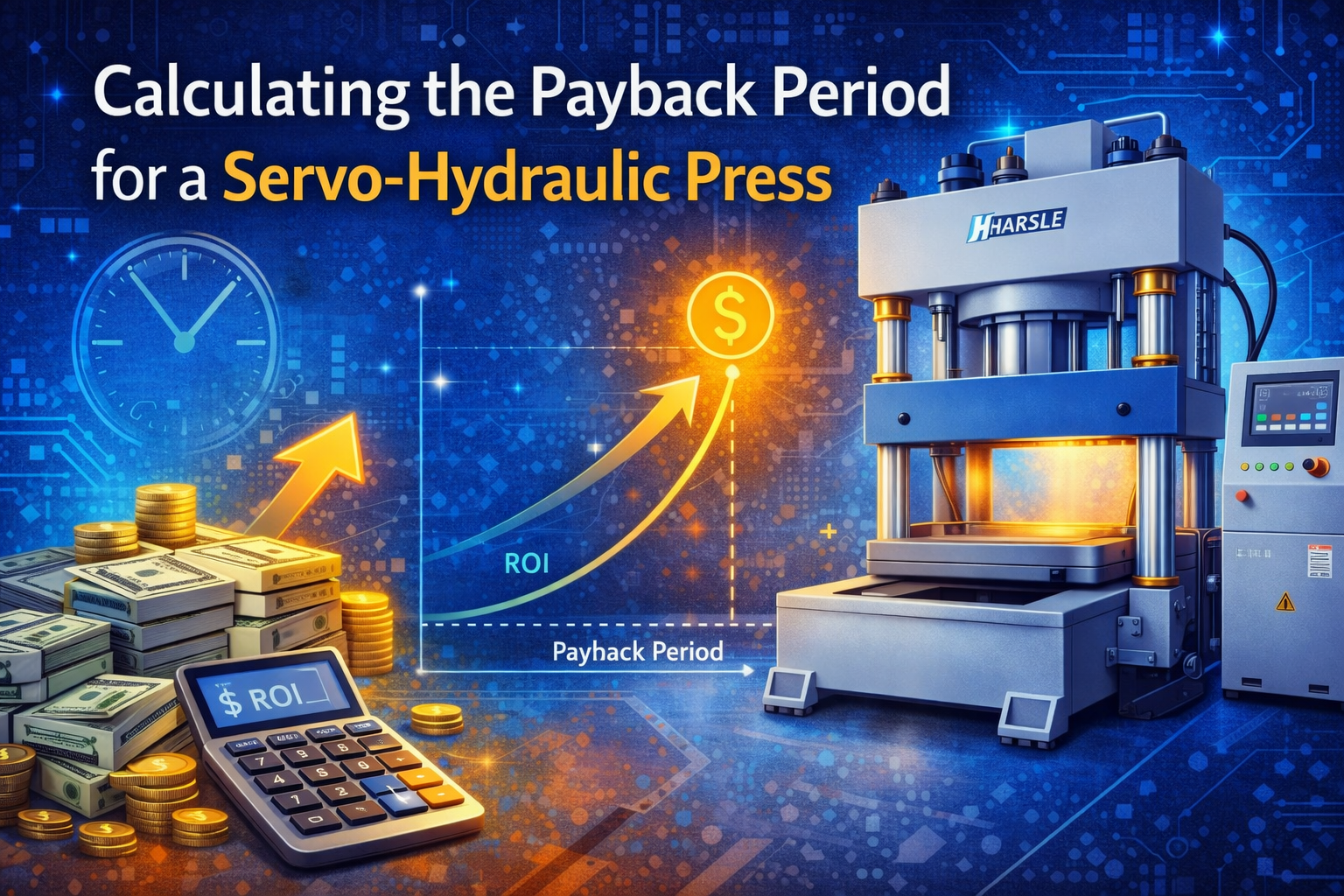
- Calculate the Payback Period: Determine how many months of operational savings it will take to cover the initial purchase price and installation costs.
Common Mistakes to Avoid in ROI Assessments
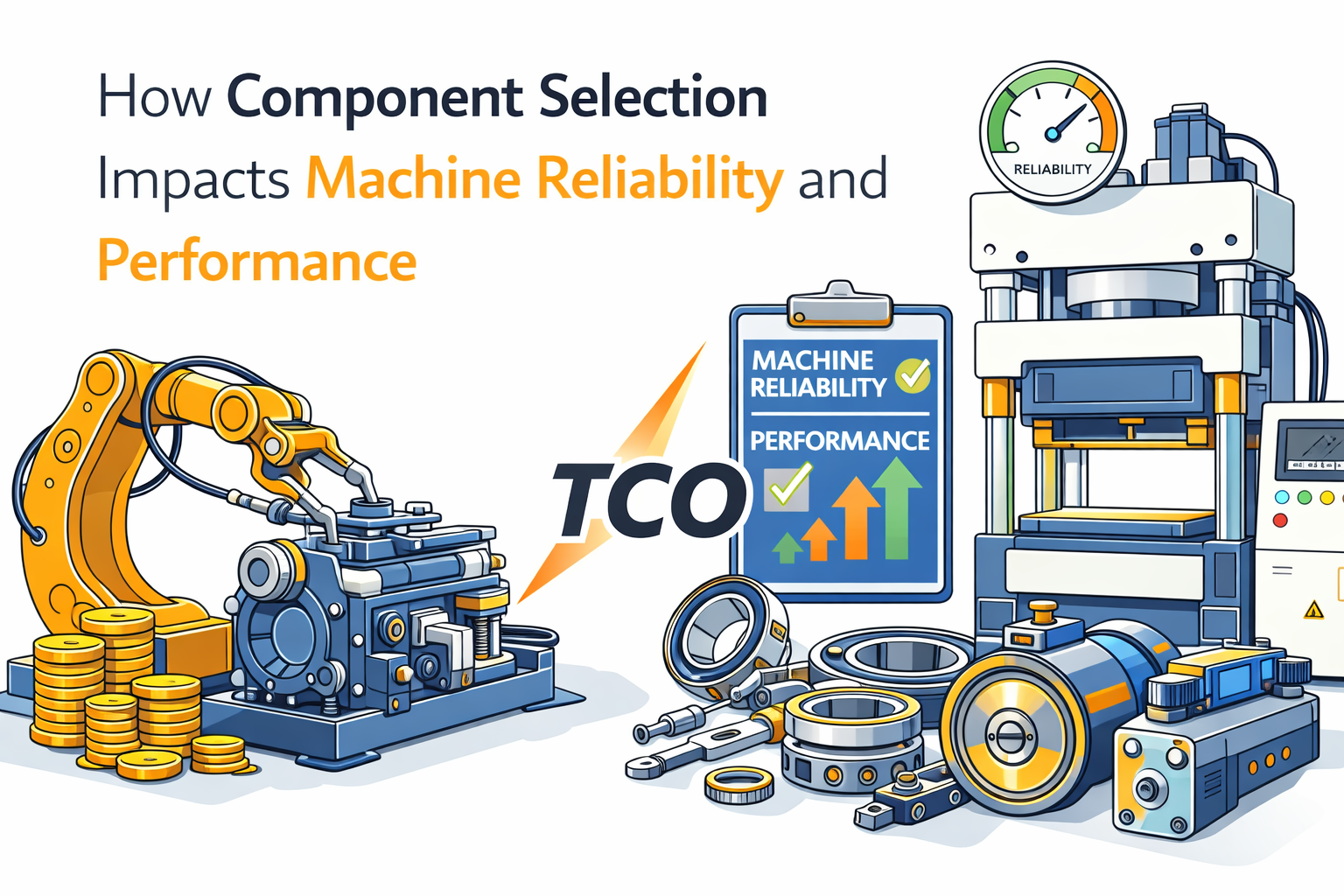
Many procurement managers make the mistake of focusing solely on the ‘Sticker Price’ of the machine. This is a narrow view that ignores the Total Cost of Ownership (TCO). A common engineering mistake is failing to account for the ‘Integration Cost’—the downtime required to remove the old machine and train staff on the new CNC interface. Additionally, many ignore the residual value of the old machine; selling legacy equipment can provide a significant ‘down payment’ for the upgrade, immediately improving the ROI. Lastly, don’t forget to account for inflation in utility costs and labor rates over the next five years, which makes the energy efficiency of modern presses even more valuable over time.
The true cost of an old machine is the revenue you lose by not being able to produce at the speed of your competitors.
Industry Applications and Case Scenarios
In the automotive sector, where high-volume production is the norm, even a 2-second reduction in cycle time via a modern hydraulic press can result in tens of thousands of dollars in annual savings. In aerospace, where material costs are exceptionally high (e.g., titanium or specialized alloys), the precision of a modern press drastically reduces the ‘buy-to-fly’ ratio by minimizing scrap. For example, a mid-sized fabrication shop specialized in appliance housings reported that after upgrading to a modern CNC-controlled hydraulic press, their part rejection rate dropped from 4 percent to 0.2 percent, effectively paying for the machine’s interest payments through material savings alone.
Conclusão
Calculating the ROI of Upgrading to a Modern Hydraulic Press is a multi-faceted process that requires balancing engineering precision with financial foresight. By moving beyond the initial capital expenditure and analyzing energy efficiency, labor productivity, and maintenance predictability, manufacturers can clearly see that modernization is an investment in future growth rather than a mere expense. For shops looking to remain viable in an era of Industry 4.0, the question is no longer whether they can afford to upgrade, but rather whether they can afford the mounting costs of standing still.
Perguntas frequentes
What is the typical payback period for a modern hydraulic press?
Depending on the shift intensity and production volume, most manufacturers see a full ROI within 18 to 36 months, primarily driven by energy savings and reduced labor hours.
How much energy does a servo-hydraulic press save compared to a standard one?
Servo-hydraulic systems can reduce energy consumption by up to 60 percent because the motor only runs when the machine is actively moving or holding pressure, eliminating idle power draw.
Can upgrading the controller on an old press provide the same ROI?
While a controller upgrade improves the interface, it does not address the mechanical wear, inefficient hydraulic pumps, or lack of modern safety features found in a new machine.
Does a modern hydraulic press require more specialized maintenance?
While the electronics are more complex, modern presses require less physical maintenance due to self-lubricating components and digital diagnostics that catch issues before they cause failure.
How does precision impact the ROI calculation?
Higher precision reduces the need for secondary processes like grinding or straightening and significantly lowers the scrap rate, which directly increases the profit margin per part produced.