














High-Speed Pressing for Aluminum Can and Container Production

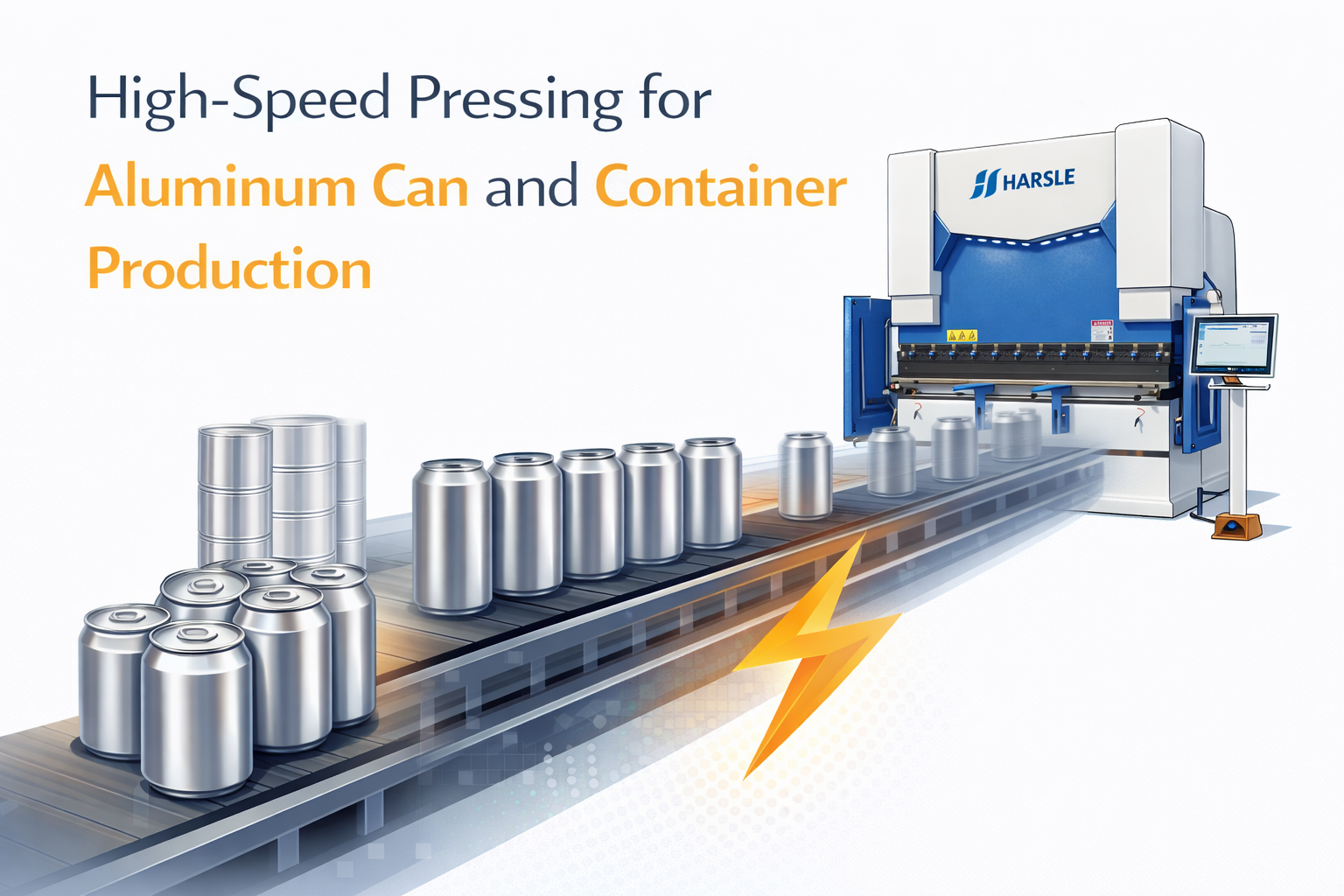
In the world of high-volume sheet metal fabrication, few processes match the speed and precision of aluminum can production. High-speed pressing for aluminum cans is a marvel of mechanical engineering, where a single production line can churn out over 2,000 cans per minute. This level of output requires more than just fast machinery; it demands a deep understanding of material deformation, thermal management, and ultra-precise tooling. For factory owners and engineers, the transition from standard sheet metal work to the high-speed D&I (Drawn and Ironed) process represents a significant technical leap in both equipment capability and process control.
As the global demand for sustainable packaging grows, aluminum remains the material of choice due to its infinite recyclability and lightweight properties. However, high-speed pressing for aluminum cans involves managing high-cycle fatigue, microscopic tool wear, and complex lubrication dynamics. This article provides a comprehensive technical breakdown of the equipment, calculations, and operational strategies required to master high-speed container production.
Understanding the Basics of High-Speed Pressing
High-speed pressing for aluminum cans primarily utilizes the Drawing and Ironing (D&I) technique. Unlike traditional stamping, which might involve a single hit to form a part, the D&I process is a multi-stage sequence that transforms a flat aluminum disk (the blank) into a thin-walled, tall cylinder. The process begins with the cupping press, which stamps out thousands of circular disks from a wide coil of aluminum and performs the initial draw to create a shallow cup.
These cups are then fed into a bodymaker. The bodymaker is a horizontal press that pushes the cup through a series of ironing rings. Each ring has a progressively smaller diameter, which reduces the wall thickness of the aluminum while increasing its height. This plastic deformation is performed at such high velocities that the material behaves almost fluidly. The final stage involves the formation of the can bottom (the dome), which is designed to withstand internal carbonation pressure.
The efficiency of a high-speed pressing line is measured not just in strokes per minute, but in the stability of the material flow under extreme strain rates.
Why High-Speed Pressing for Aluminum Cans Matters
The significance of high-speed pressing in modern manufacturing cannot be overstated. From a B2B perspective, the margins in container production are razor-thin, often calculated to the fourth or fifth decimal point per unit. Success in this industry depends on three pillars: volume, material utilization, and downtime minimization.
- Material Efficiency: High-speed presses are designed to work with ultra-thin gauges, often starting with 0.25mm aluminum and ironing the walls down to less than 0.10mm. Even a 1 percent reduction in material waste can save a large-scale manufacturer millions of dollars annually.
- Energy Consumption: Modern servo-driven high-speed presses optimize the energy curve, recovering energy during the deceleration phase of the stroke.
- Market Responsiveness: The ability to switch between different can sizes (e.g., standard 12oz vs. sleek 12oz) with minimal tooling changeover time is a competitive necessity.
Key Factors in High-Speed Pressing Optimization
When engineering a high-speed pressing line, several technical variables must be synchronized. If any one of these factors is out of alignment, the resulting friction will cause tearing, wrinkles, or catastrophic tool failure.
1. Material Specification
Aluminum alloy 3104-H19 is the industry standard for can bodies. It offers the perfect balance of formability and strength. The H19 temper indicates that the material has been heavily cold-worked, providing the high tensile strength needed to resist the pressures of carbonated beverages while remaining ductile enough for the ironing process.
2. Lubrication and Cooling
At 300 to 400 strokes per minute, the friction between the punch and the ironing rings generates immense heat. A synthetic or semi-synthetic coolant (emulsion) is sprayed directly onto the tooling. This fluid serves two purposes: reducing friction and carrying away heat to prevent the aluminum from welding itself to the carbide dies.
3. Tooling Precision
The dies used in high-speed pressing are typically made of tungsten carbide or ceramic composites. These materials offer the hardness required to maintain dimensional stability over millions of cycles. Clearances between the punch and the ironing rings are measured in microns.
Technical Explanation and Engineering Calculations
To design or optimize a high-speed press, engineers must calculate the tonnage requirements and the reduction ratios for each ironing stage. Let us look at the fundamental calculations for the drawing force and wall thinning.
Tonnage Calculation for the Initial Cup
The force required to blank and draw the initial cup from the aluminum coil is calculated as follows:
P = 3.14 * d * t * UTS
Where:
P = Pressing force (Newtons)
d = Diameter of the blank (mm)
t = Sheet thickness (mm)
UTS = Ultimate Tensile Strength of the aluminum (MPa)
For a typical can blank with a diameter of 140mm, a thickness of 0.25mm, and a UTS of 280 MPa, the calculation would be:
P = 3.14 * 140 * 0.25 * 280 = 30,772 N (approximately 31 kN per cup).
Ironing Reduction Ratio
In the bodymaker, the wall thickness is reduced. The reduction ratio (R) for a specific ironing die is expressed as:
R = (t1 – t2) / t1
Where:
t1 = Entering wall thickness
t2 = Exiting wall thickness
Engineers typically aim for a total reduction of 60% to 65% across three or four ironing rings to prevent material fracture. Excessive reduction in a single stage leads to high punch loads and potential sidewall failure.
Table 1: Typical Mechanical Properties for Can Alloys
| Alloy & Temper | Yield Strength (MPa) | Tensile Strength (MPa) | Elongation (%) |
|---|---|---|---|
| 3104-H19 | 260-290 | 280-310 | 2-4 |
| 3004-H19 | 240-270 | 260-290 | 3-5 |
| 5182-H48 (Ends) | 310-340 | 360-390 | 6-8 |
Comparison of High-Speed Pressing Technologies
Choosing the right press technology depends on the production scale and the variety of containers being produced. The two dominant technologies are mechanical toggle presses and modern servo-driven presses.
Table 2: Mechanical vs. Servo Presses for Aluminum Cans
| Funkcja | Conventional Mechanical Press | Advanced Servo Press |
|---|---|---|
| Speed Control | Fixed flywheel speed | Programmable stroke profile |
| Stroke Rate | High (up to 400 spm) | Very High (variable) |
| Efektywność energetyczna | Moderate | High (energy recovery) |
| Maintenance | Frequent (clutch/brake) | Low (direct drive) |
| Flexibility | Limited | Excellent for R&D/Niche sizes |
Step-by-Step Guide to the High-Speed Can Pressing Process
- Uncoiling and Lubrication: The aluminum coil is fed through a lubricator that applies a precise film of oil to both sides of the sheet.
- Cupping: The cupping press blanks the metal and draws it into a cup. These cups are then collected and conveyed to the bodymakers.
- Bodymaking (D&I): The cup is placed on a punch. The punch moves horizontally through three ironing rings and a bottom-forming tool.
- Trimming: As the can leaves the bodymaker, its top edge is uneven. A rotary trimmer cuts the can to a precise, uniform height.
- Washing and Coating: The lubricant is washed off, and a protective internal coating is applied to prevent the beverage from reacting with the metal.
- Necking and Flanging: The top of the can is narrowed (necked) to accept a smaller lid, and the edge is flanged to allow for the final double-seam.
Common Mistakes to Avoid
Even seasoned production managers can encounter issues when pushing high-speed presses to their limits. Here are the most common pitfalls:
- Improper Coolant Concentration: If the emulsion is too lean, friction increases and leads to “pickup” (aluminum sticking to the dies). If it is too rich, it can cause slippage or drainage issues.
- Ignoring Thermal Expansion: At high speeds, the punch expands due to heat. If the cooling system is not perfectly calibrated, this expansion can eliminate the clearance between the punch and the ironing ring, causing the can to tear.
- Poor Backgauge and Feed Alignment: In the cupping press, even a 0.5mm misalignment in the coil feed can result in incomplete blanks and significant scrap rates.
- Neglecting Vibration Analysis: High-speed presses generate intense harmonics. Failure to monitor vibration can lead to premature bearing failure and loss of precision in the can wall thickness.
Industry Applications
While the beverage industry is the primary user of high-speed pressing for aluminum, other sectors are adopting these technologies:
- Aerosol Containers: Personal care and industrial sprays use D&I technology to create seamless, high-pressure-resistant aluminum bottles.
- Food Packaging: Shallow-drawn aluminum cans are widely used for seafood and specialty pet foods.
- Battery Housings: The electric vehicle industry is increasingly looking at high-speed aluminum pressing for large-format cylindrical battery casings.
- Pharmaceuticals: Precision aluminum canisters for metered-dose inhalers require the same high-speed, high-cleanliness standards as food-grade production.
The transition to 100 percent recyclable aluminum packaging is driving a new era of press technology focused on ultra-thinning and high-speed efficiency.
Wniosek
High-speed pressing for aluminum cans and containers is a sophisticated integration of metallurgy, mechanical design, and fluid dynamics. Mastering this process requires a commitment to precision and a proactive approach to equipment maintenance. By optimizing reduction ratios, managing thermal loads, and selecting the right press technology, manufacturers can achieve the massive throughput required for global supply chains. As we look toward more sustainable packaging solutions, the role of high-speed pressing will only become more critical in reducing material waste and energy consumption across the manufacturing sector.
Często zadawane pytania
What is the production speed of a modern high-speed can press?
Modern cupping presses can produce over 3,000 cups per minute, while individual bodymakers typically run between 350 and 450 strokes per minute, with multiple bodymakers linked in a single line.
Why is aluminum 3104 used instead of 6061?
3104 is a manganese-alloyed aluminum that offers superior work-hardening properties. It allows for the thin-wall ironing required for cans, whereas 6061 is more suited for structural applications and does not iron as effectively in high-speed D&I processes.
How often must the carbide dies be replaced?
With proper lubrication and cooling, high-quality tungsten carbide ironing rings can last for several million cycles before requiring polishing or replacement due to dimensional wear.
What causes a can wall to tear during the ironing process?
Tearing is usually caused by excessive reduction in a single stage, improper lubrication, or tool misalignment. It can also occur if the material has microscopic inclusions or metallurgical defects.
Can the same press produce both 330ml and 500ml cans?
Yes, but it requires a changeover. The punch length and the stroke of the bodymaker must be adjusted, and the trimmer settings must be changed to accommodate the different heights.